

Welcome to Fiber
Fiber is an Express inspired web framework built on top of Fasthttp, the fastest HTTP engine for Go. Designed to ease things up for fast development with zero memory allocation and performance in mind.Why Fiber?
New gophers that make the switch from Node.js to Go are dealing with a learning curve before they can start building their web applications or microservices. Fiber, as a web framework, was created with the idea of minimalism and follows the UNIX way, so that new gophers can quickly enter the world of Go with a warm and trusted welcome. Fiber is inspired by Express, the most popular web framework on the Internet. We combined the ease of Express and raw performance of Go. If you have ever implemented a web application in Node.js (using Express or similar), then many methods and principles will seem very common to you.Quick example
Here’s a simple “Hello, World” example to get you started:http://localhost:3000 in your browser to see the message.
Key features
Routing
Robust routing system with support for parameters, wildcards, and named routes
Middleware
Extensive middleware ecosystem with support for custom middleware and Next() chaining
API reference
Complete API endpoints for request and response handling
Client
Easy-to-use HTTP client based on fasthttp, inspired by resty and axios
Performance
Extreme performance with low memory footprint and zero allocation
Static files
Serve static files with built-in middleware
WebSocket support
Full WebSocket and Socket.io support
Template engines
Multiple template engines including Pug, Handlebars, Mustache, and more
Zero allocation
Fiber is optimized for high-performance, meaning values returned from fiber.Ctx are not immutable by default and will be re-used across requests. As a rule of thumb, you must only use context values within the handler and must not keep any references. Once you return from the handler, any values obtained from the context will be re-used in future requests.Benchmarks
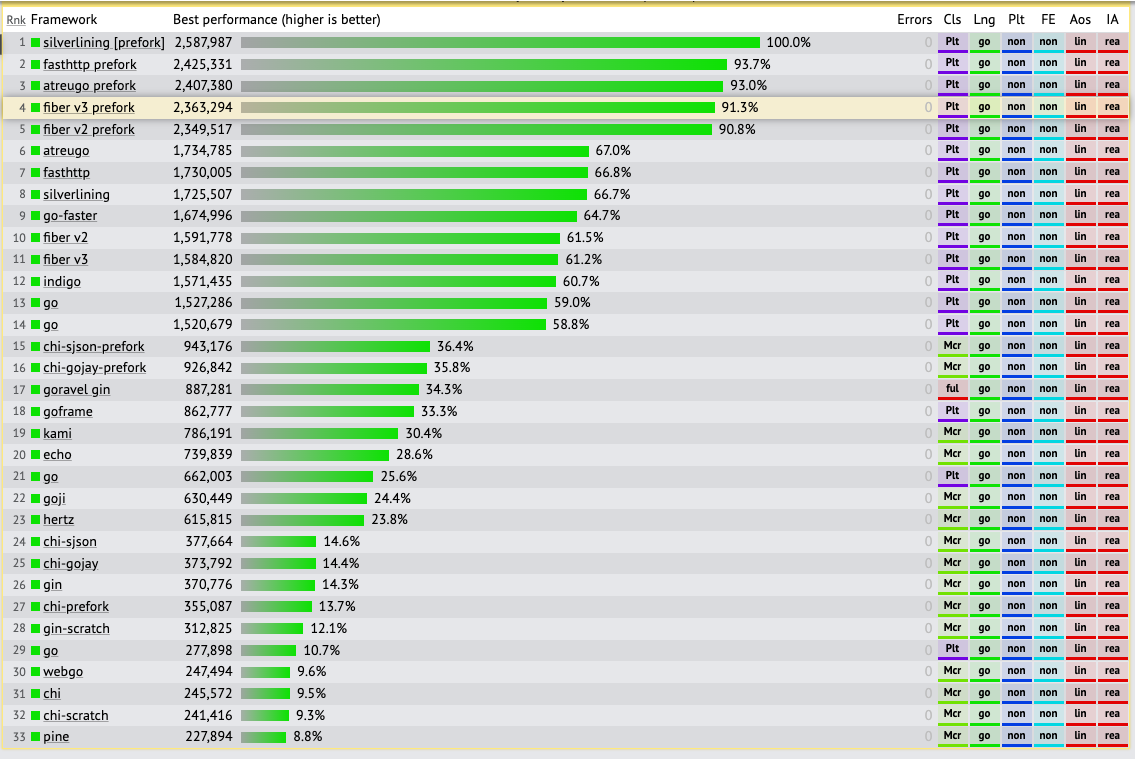
These tests are performed by TechEmpower. Fiber consistently ranks among the top Go frameworks for both plaintext and JSON serialization benchmarks.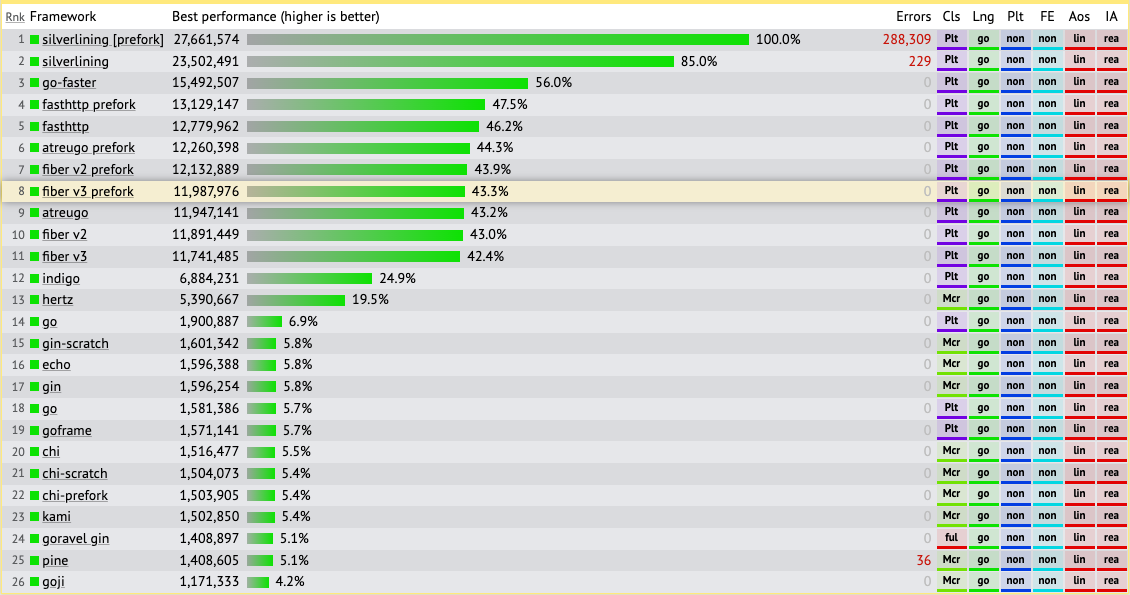
Philosophy
We listen to our users in issues, Discord channel and all over the Internet to create a fast, flexible and friendly Go web framework for any task, deadline and developer skill! Just like Express does in the JavaScript world.Compatibility
net/http compatibility
Fiber can run side by side with the standard library. The router accepts existingnet/http handlers directly and even works with native fasthttp.RequestHandler callbacks:
When you need to convert entire applications or re-use
net/http middleware chains, rely on the adaptor middleware.Express-style handlers
Fiber also adapts Express-style callbacks that operate on the lightweightfiber.Req and fiber.Res helper interfaces:
Next steps
Installation
Get started by installing Fiber in your project
Quick start
Build your first Fiber application
Routing guide
Learn about Fiber’s routing capabilities
API documentation
Explore the complete API reference