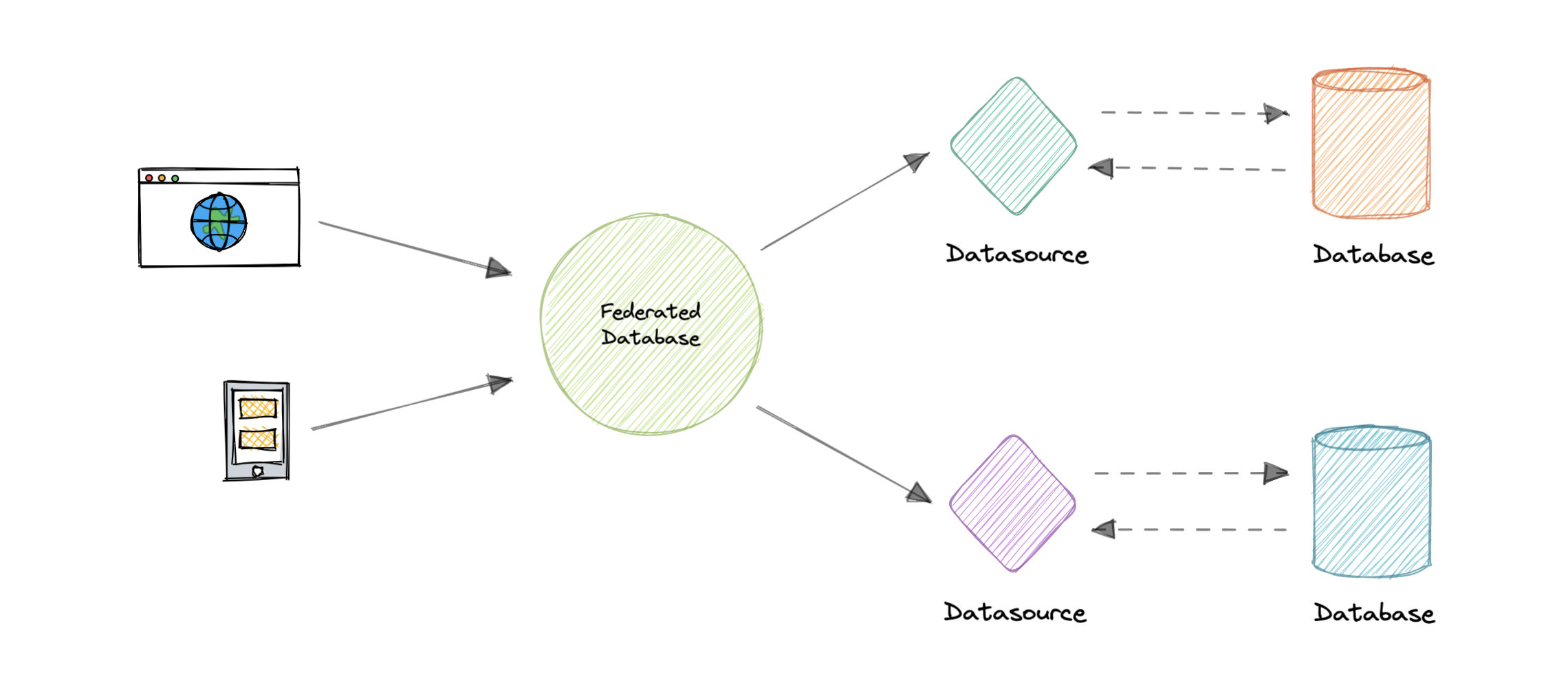
 Federation also provides a cohesive, unified view of data derived from multiple sources. The data sources for federated systems can include databases and various other forms of structured and unstructured data.
Characteristics
Let’s look at some key characteristics of a federated database:- Transparency: Federated database masks user differences and implementations of underlying data sources. Therefore, the users do not need to be aware of where the data is stored.
- Heterogeneity: Data sources can differ in many ways. A federated database system can handle different hardware, network protocols, data models, etc.
- Extensibility: New sources may be needed to meet the changing needs of the business. A good federated database system needs to make it easy to add new sources.
- Autonomy: A Federated database does not change existing data sources, interfaces should remain the same.
- Data integration: A federated database can integrate data from different protocols, database management systems, etc.
Advantages
Here are some advantages of federated databases:- Flexible data sharing.
- Autonomy among the database components.
- Access heterogeneous data in a unified way.
- No tight coupling of applications with legacy databases.
Disadvantages
Below are some disadvantages of federated databases:- Adds more hardware and additional complexity.
- Joining data from two databases is complex.
- Dependence on autonomous data sources.
- Query performance and scalability.