Han Wang
Co-Founder
Share this article
Han Wang
Co-Founder
Share this article
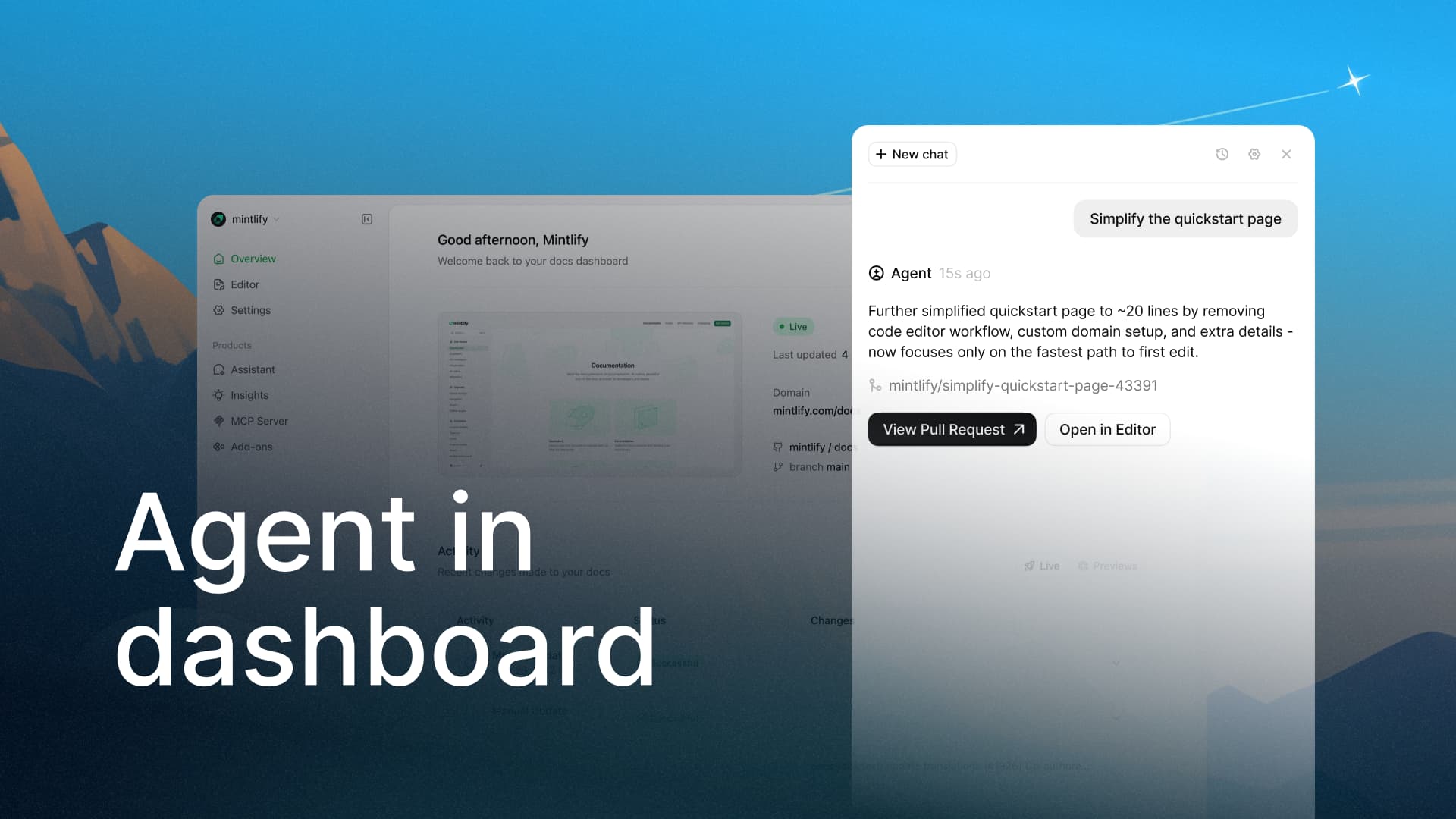
This post introduces new capabilities of the mintlify agent, now available in both Slack and the dashboard. The agent can understand your documentation, code, and context to generate PRs, suggest updates automatically, and help teams create and maintain accurate docs with far less effort.
Shipping new features used to mean building the functionality, then stopping to draft docs from scratch, cross-check existing pages, create a pull request, and repeat the cycle whenever inconsistencies surfaced.
We recently shipped the Mintlify agent in Slack. It understands your existing documentation, so you can simply tell it what to update and it will generate the pull request for you. You can add extra context to refine its output and keep iterating until it’s exactly right.
Now, the agent will surface suggested documentation changes automatically based on new code you ship, right from the mintlify dashboard.
With the agent you can write new content from prompts or PRs, revise outdated code examples and API references, search and update existing docs, and answer questions about your documentation or technical writing.
How it works
In the dashboard
Open the agent panel from your dashboard with ⌘+I (Mac), Ctrl+I (Windows/Linux), or by clicking Ask agent. Inside, you’ll find:
- Chat for sending prompts and getting proposed doc changes
- History to revisit past conversations
- Settings to manage GitHub and Slack integrations
When the agent proposes updates, you can open the pull request directly from the chat or preview the changes in the web editor.
In your Slack workspace
You can also use the agent directly in Slack to collaborate on documentation updates. If your workspace requires admin approval for apps, make sure the mintlify app is approved first.
To connect:
- Open the agent panel → Settings
- Click Connect under Slack integration
- Add the
mintlifyapp and link your account - Test it by sending the agent a DM or mentioning
@mintlifyin a channel
What's next for automation in documentation
No matter how hard teams try, human-maintained documentation inevitably drifts out of date. The people with the most context have the least time, and those with time often lack the context.
We’re now entering an era of self-updating knowledge systems: documentation that evolves on its own by monitoring pull requests, capturing content from Slack and support tickets, synthesizing updates from multiple sources, and proactively flagging contradictions or outdated information.
This means your knowledge becomes a living source of truth, always up-to-date for both human readers and the AI systems that increasingly rely on it.
Stay tuned for more updates.
More blog posts to read

Less is more: Improving editor performance
The Mintlify editor now opens, navigates, and edits very large pages up to 100x faster by doing less work.
October 14, 2026Hunter Chen
Engineering
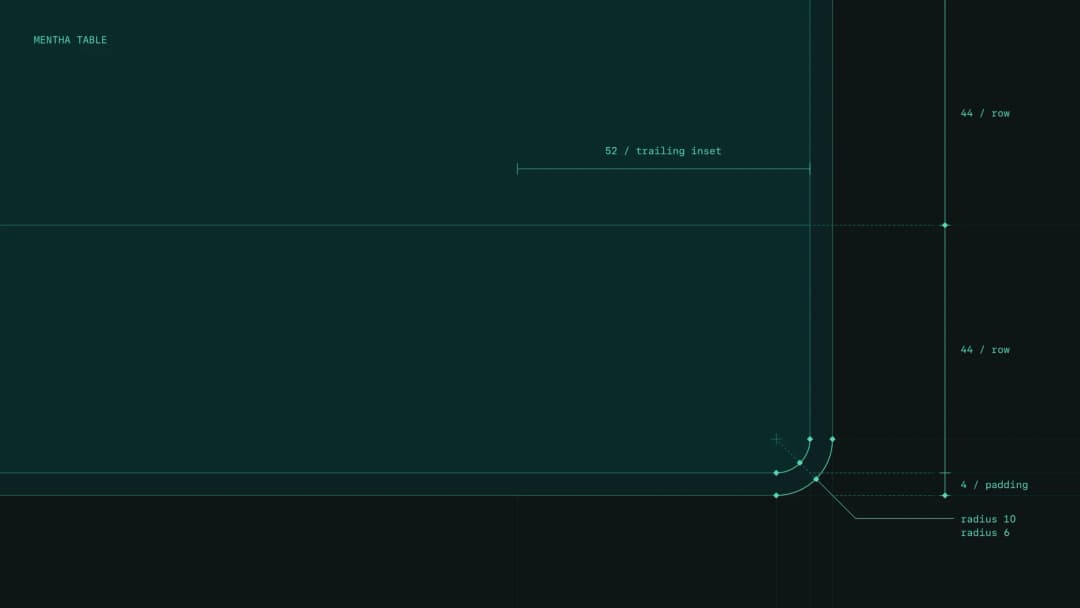
Inside Mentha, Mintlify's new design system
Mentha is Mintlify's new design system, built with constraints, baked-in patterns, a cooler mint palette, and agents in mind.
October 12, 2026Fay Dakrouri
Design