Overview
Uber has revolutionized transportation by connecting riders with drivers through a real-time marketplace. Operating in 10,000+ cities across 70+ countries, Uber’s platform handles millions of trips daily while maintaining sub-second response times. This case study examines Uber’s technical architecture, from frontend to backend, and how it has evolved to support massive scale and reliability.Note: This analysis is based on Uber engineering blogs and open-source projects. Uber’s architecture continues to evolve as the company scales globally.
Overall Architecture
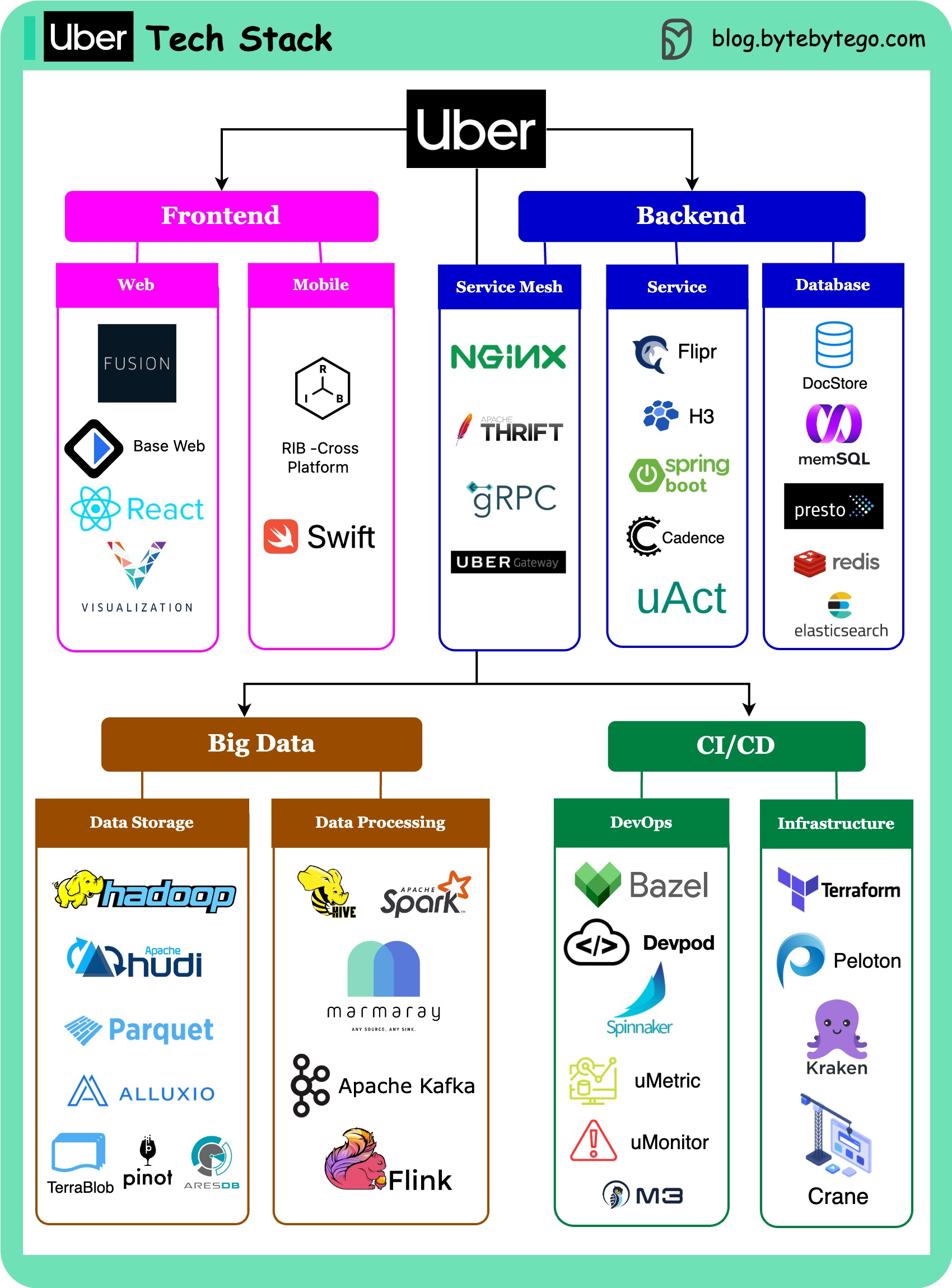
Frontend Technologies
Web Frontend
Fusion.js Framework
Fusion.js Framework
Uber built Fusion.js as a modern React-based framework for creating robust web applications.Key Features:
- Plugin-based architecture
- Universal rendering (SSR + CSR)
- Built-in performance optimization
- Type-safe with TypeScript support
- Standardization across teams
- Optimized for Uber’s specific needs
- Better developer experience
Visualization.js
Visualization.js
Custom geospatial visualization library for:
- Real-time driver locations
- Route visualization
- Heatmaps for demand
- ETA calculations
Mobile Architecture
iOS
Swift with RIBs architecture
- Router, Interactor, Builder
- Testable and maintainable
- Shared business logic
Android
Java/Kotlin with RIBs architecture
- Same architectural patterns as iOS
- Platform-specific optimizations
- Consistent user experience
RIBs Architecture Pattern
Uber developed RIBs (Router, Interactor, Builder) as a cross-platform alternative to MVC: Components:- Router: Manages navigation between screens
- Interactor: Contains business logic
- Builder: Handles dependency injection
- Presenter: Translates business logic to view updates
- View: Displays UI and captures user input
- Cross-platform consistency (iOS and Android)
- Better testability than MVC/MVVM
- Clear separation of concerns
- Scalable for large teams
Service Mesh and Gateway
Uber Gateway
Uber built a custom gateway on top of NGINX with dynamic configuration capabilities: Features:- Dynamic routing rules without restarts
- Rate limiting and throttling
- Authentication and authorization
- Request/response transformation
- Service discovery integration
Communication Protocols
gRPC
gRPC
Used for internal service-to-service communication:
- HTTP/2 based
- Binary protocol (Protocol Buffers)
- Bi-directional streaming
- Automatic code generation
- Real-time location updates
- Driver dispatch
- High-frequency microservice calls
QUIC Protocol
QUIC Protocol
Used for client-server communication:
- Built on UDP instead of TCP
- Reduced latency for mobile networks
- Better handling of network switches
- 0-RTT connection establishment
- Mobile users frequently switch networks
- Lower latency for location updates
- Better user experience in poor network conditions
Apache Thrift
Apache Thrift
Used for API definition and RPC:
- Cross-language support
- Efficient binary serialization
- Code generation for multiple languages
- Used before gRPC adoption
Backend Services
Configuration Management
Flipr (later UCDP - Unified Configuration Data Platform):- Centralized configuration store
- Real-time configuration updates
- No deployment needed for config changes
- Versioning and rollback capabilities
- A/B testing support
Location Services
H3 - Hexagonal Hierarchical Geospatial Index
H3 - Hexagonal Hierarchical Geospatial Index
Uber’s geospatial indexing system (open-sourced):How It Works:
- Divides Earth into hexagonal cells
- Hierarchical levels (0-15)
- Each level provides different resolution
- Efficient proximity queries
- Finding nearby drivers
- Geofencing
- Surge pricing zones
- Market analytics
- Better than grid-based systems
- Hexagons have uniform neighbor distances
- Efficient storage and queries
- Open-source for community use
Service Framework
- Spring Boot: Primary framework for Java services
- uAct: Event-driven architecture framework
- Pub/sub messaging
- Event sourcing support
- Saga pattern implementation
Workflow Orchestration
Cadence - Distributed workflow engine:- Async workflow orchestration
- Long-running business processes
- Fault-tolerant execution
- Workflow versioning
- Trip lifecycle management
- Payment processing
- Driver onboarding
- Refund workflows
Database Architecture
OLTP Databases
DocStore
DocStore
Uber’s strongly-consistent document store:Built on:
- MySQL for transactional data
- PostgreSQL for specific use cases
- Consistent across regions
- ACID transactions
- Multi-document transactions
- JSON document storage
- SQL-like query capabilities
RocksDB
RocksDB
Embedded key-value store:
- High-performance storage engine
- Used within other databases
- LSM tree based
- Optimized for SSDs
Big Data Platform
Uber’s data platform is built on the Hadoop ecosystem: Storage:- Apache Hudi: Incremental data lake storage
- Apache Parquet: Columnar file format
- Alluxio: Distributed cache layer
- Pinot: Real-time analytics (OLAP)
- AresDB: GPU-powered time-series database
- Real-time analytics on ride data
- Sub-second query latency
- GPU acceleration for aggregations
Data Processing
Batch Processing
- Apache Hive: SQL on Hadoop
- Apache Spark: Large-scale data processing
- Marmaray: Data ingestion framework (open-source)
Stream Processing
- Apache Kafka: Message streaming
- Apache Flink: Real-time stream processing
- Used for real-time analytics and monitoring
API Gateway Evolution
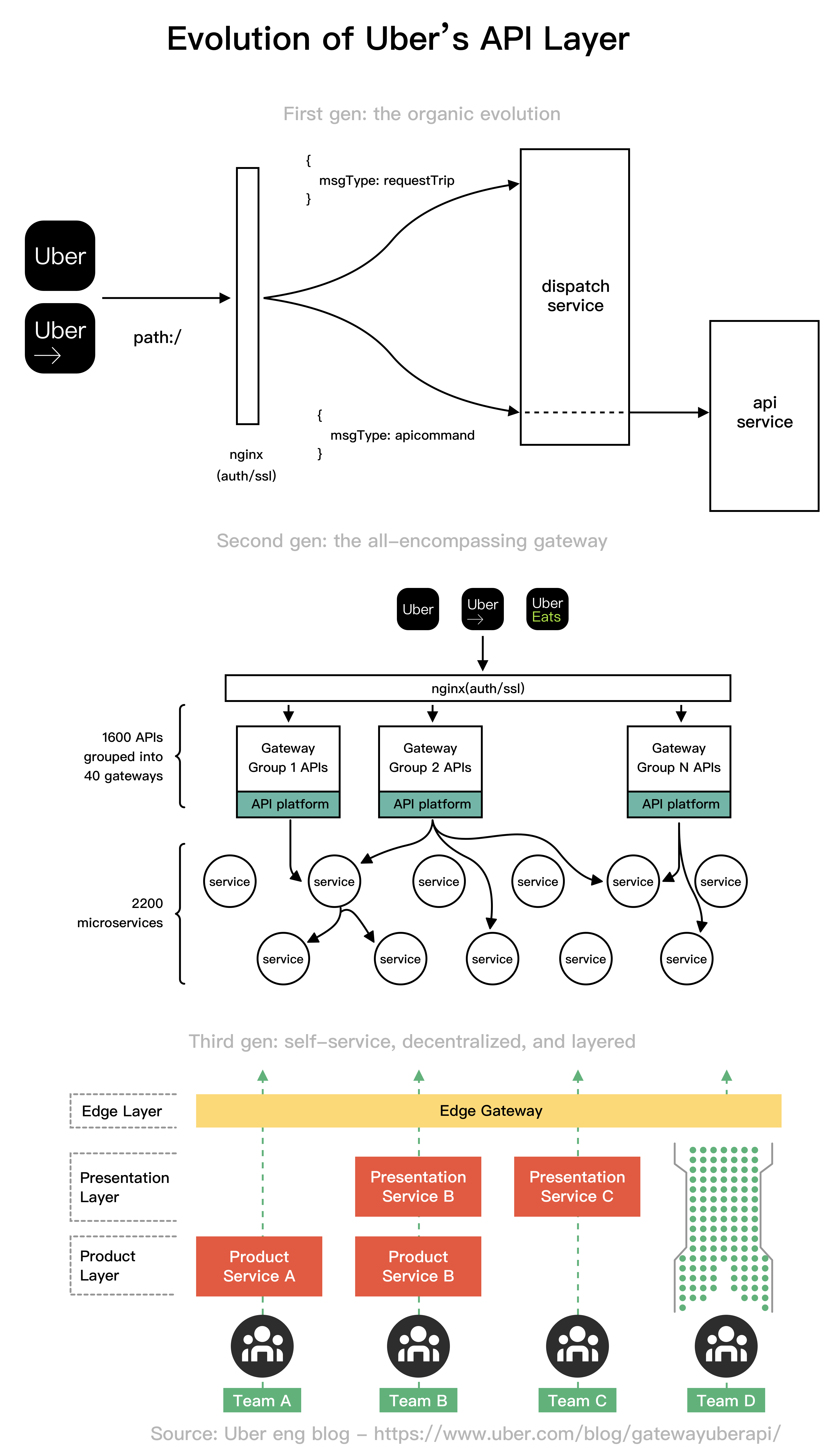
First Generation: Organic Evolution (2014)
Uber started with two key services: Dispatch Service:- Connects riders with drivers
- Real-time matching algorithm
- Location-based routing
- Stores user data
- Trip history
- Long-term data persistence
- Monolithic components
- Difficult to scale independently
- Limited flexibility
Second Generation: All-Encompassing Gateway (2015-2018)
Uber adopted microservices early, reaching 2,200+ microservices by 2019. Gateway Responsibilities:- Routing to appropriate services
- Authentication and authorization
- Rate limiting
- Request/response transformation
- Monitoring and logging
- Gateway became a bottleneck
- Difficult to maintain
- Tight coupling between teams
- Deployment coordination required
Third Generation: Self-Service, Decentralized, Layered (2018-Present)
As Uber expanded to new business lines (Freight, ATG, Elevate, Groceries), a new approach was needed: Key Features:- Self-Service: Teams can define their own API contracts
- Decentralized: Multiple gateways for different domains
- Layered: Different layers for different concerns
- Edge layer: TLS termination, DDoS protection
- Gateway layer: Routing, authentication
- Service layer: Business logic
- Teams move faster independently
- Better isolation and fault tolerance
- Easier to maintain and scale
- Domain-specific optimizations
DevOps and CI/CD
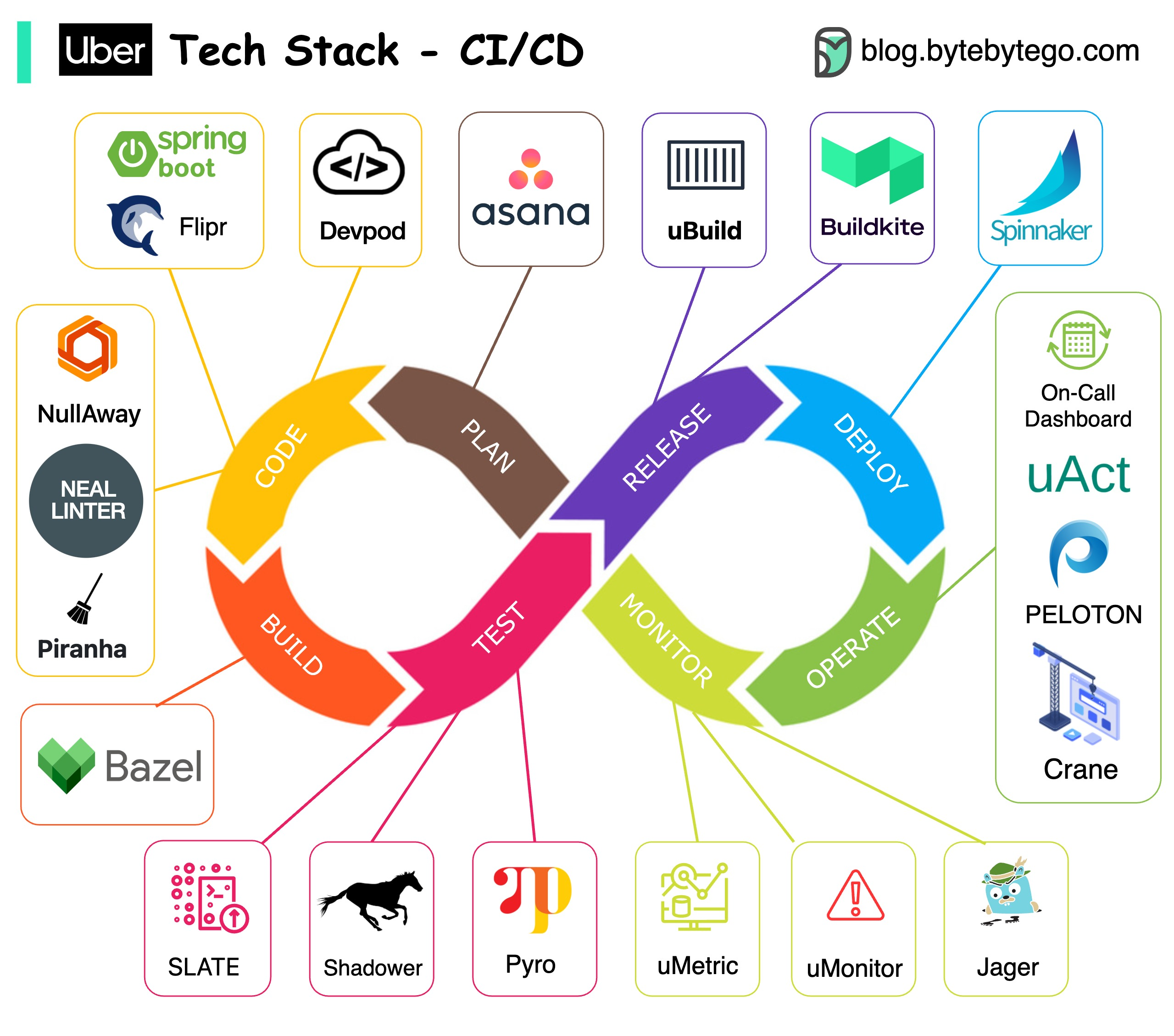
Development Workflow
Monorepo Strategy
Monorepo Strategy
Uber uses a monorepo for code organization:Build System:
- Bazel: Large-scale build system
- Incremental builds
- Cached artifacts
- Deterministic builds
- Atomic commits across services
- Easier refactoring
- Shared libraries
- Consistent tooling
- Large repository size
- Build complexity
- Requires investment in tooling
Development Environment
Development Environment
Devpod:
- Simplified local development
- Cloud-based development environments
- Consistent setup across team
- Reduces onboarding time
Code Quality
Custom Tooling:- NullAway: Eliminates NullPointer exceptions in Java
- NEAL: Code linting and style enforcement
- Piranha: Cleans outdated feature flags automatically
Testing
Unit & Integration
- Standard testing frameworks
- High test coverage requirements
- Automated test runs on PRs
Load Testing
Shadower:
- Replays production traffic
- Tests services under real load
- Identifies performance regressions
- Manages short-lived testing environments
- Spins up isolated test clusters
- Automatic cleanup
- Ensures smooth user experience
- Load shedding during overload
- Graceful degradation
Experimentation Platform
Uber’s experimentation platform enables data-driven decisions: Features:- A/B testing framework
- Deep learning-based analysis
- Real-time metrics
- Statistical significance calculations
- Pyro: Probabilistic programming in Python
- Used for Bayesian inference in experiments
Build and Deploy
Build - uBuild
Build - uBuild
Uber’s containerization platform:
- Built on Buildkite
- Packages services into containers
- Optimized build caching
- Multi-architecture support
Deploy - Spinnaker
Deploy - Spinnaker
Uses Netflix Spinnaker for deployments:
- Multi-cloud support
- Canary deployments
- Automated rollbacks
- Integration with monitoring
Monitoring and Observability
uMetric Platform:- Built on Cassandra
- Consistent metrics across services
- Real-time dashboards
- Alerting integration
- Metrics: uMetric
- Logs: ELK Stack
- Traces: Distributed tracing
- Alerts: uMonitor
- On-call rotation management
- Incident tracking
- Automated escalation
- Post-mortem workflows
Special Tooling
Peloton
Capacity planning, scheduling, and resource management
Crane
Multi-cloud infrastructure optimization for cost savings
uAct
Event tracing and debugging across distributed systems
Key Architecture Decisions
1. Microservices at Scale
- Early adoption of microservices (2,200+ services)
- Service per business capability
- Clear ownership model
- Independent deployment
2. Real-Time Processing
- Location updates every few seconds
- Sub-second matching algorithms
- Real-time pricing (surge)
- Event-driven architecture
3. Geospatial Optimization
- Custom H3 indexing system
- Efficient proximity searches
- Geofencing for regions
- Market-specific configurations
4. Observability First
- Custom monitoring tools (uMetric, uMonitor)
- Distributed tracing
- Real-time alerting
- Data-driven decisions
5. Mobile Optimization
- Custom RIBs architecture
- QUIC protocol for better mobile performance
- Offline capabilities
- Battery and data usage optimization
Lessons Learned
Custom When Necessary
Uber built many custom solutions (Fusion.js, H3, RIBs, uBuild) when existing tools didn’t meet their specific needs.
Mobile-First
As a mobile-first platform, Uber optimized protocols (QUIC), architecture (RIBs), and infrastructure specifically for mobile constraints.
Polyglot Approach
Using the right language for each use case: Swift/Kotlin for mobile, Java for services, Rust for performance-critical components.
Developer Productivity
Heavy investment in developer tools (devpod, NullAway, SLATE) to maintain velocity as the organization scales.
Scale Statistics
- 10,000+ cities worldwide
- 70+ countries
- Millions of trips daily
- 2,200+ microservices
- Sub-second response times for most operations
- Thousands of engineers