What is REST API?
REST (Representational State Transfer) is an architectural style for designing networked applications. REST APIs use HTTP methods to perform CRUD operations and communicate between clients and servers in a stateless manner.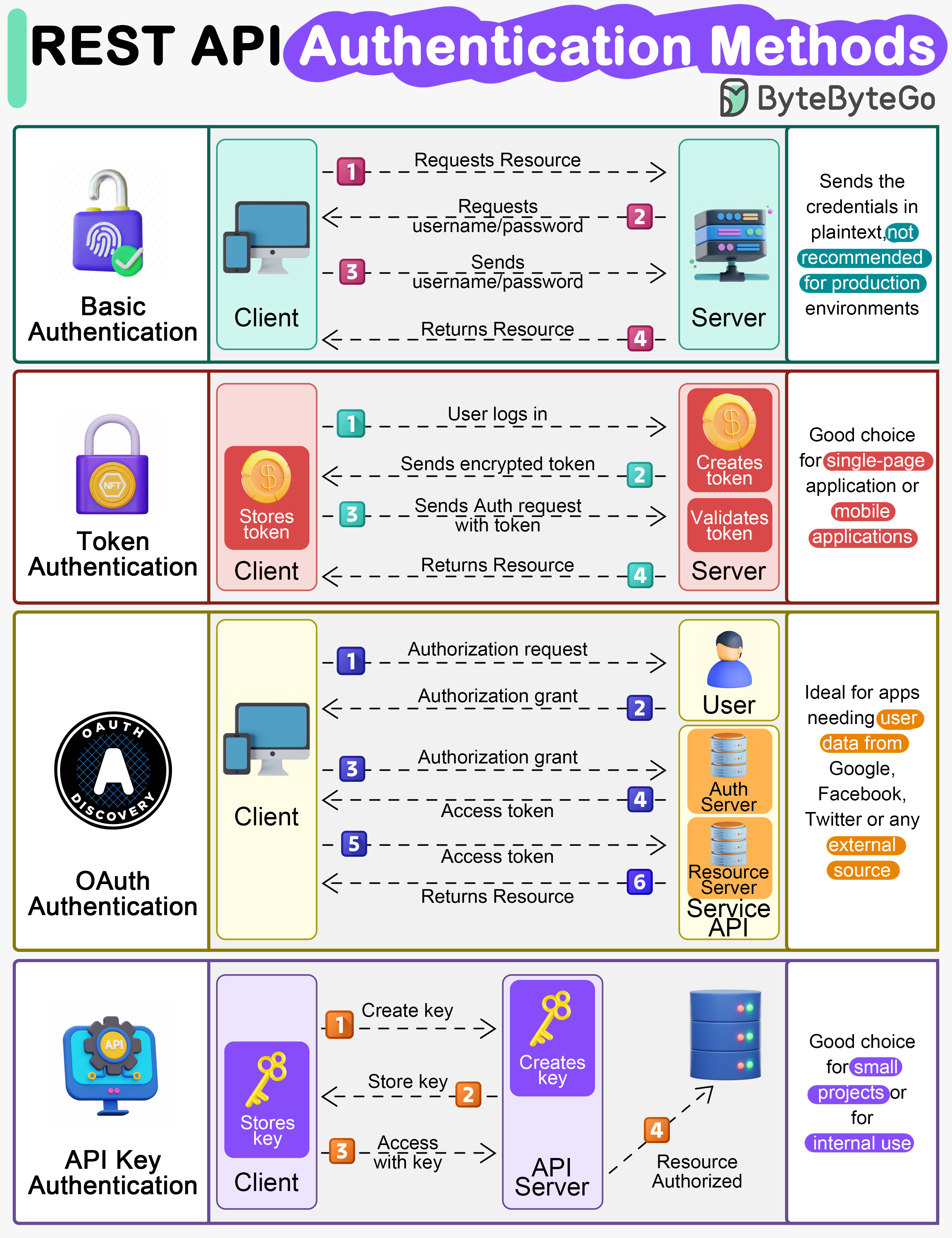
Core Principles of REST
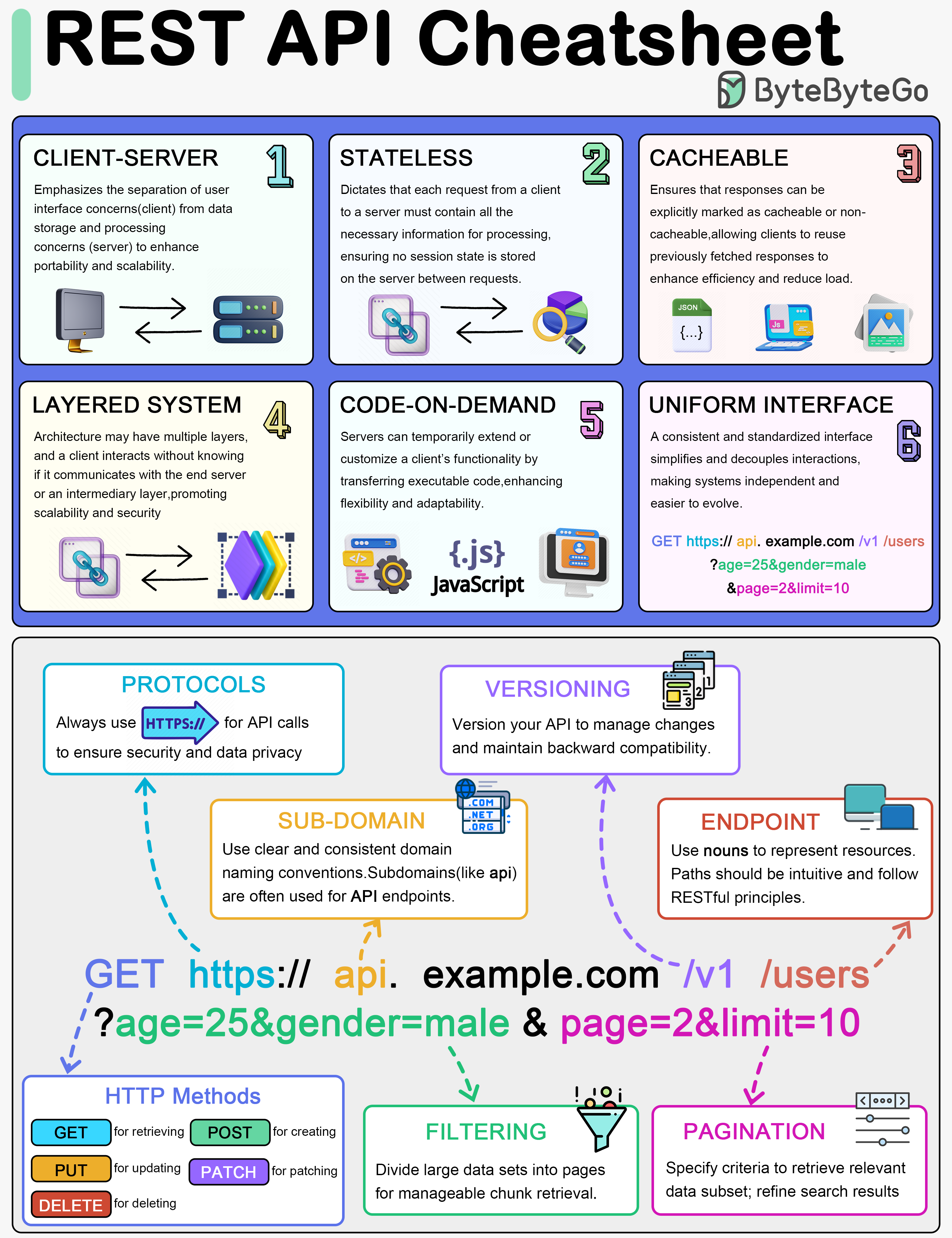
REST is built on six fundamental principles that ensure scalability and maintainability:Client-Server Architecture
Separation of concerns between the user interface (client) and data storage (server), allowing independent evolution of both components.
Stateless Communication
Each request from client to server must contain all information needed to understand and process the request. The server stores no client context between requests.
Cacheability
Responses must define themselves as cacheable or non-cacheable to improve performance and scalability.
Uniform Interface
Standardized way of communicating between client and server through resource identification, manipulation through representations, and self-descriptive messages.
Layered System
Architecture can be composed of hierarchical layers, with each component only interacting with its immediate layer.
HTTP Methods
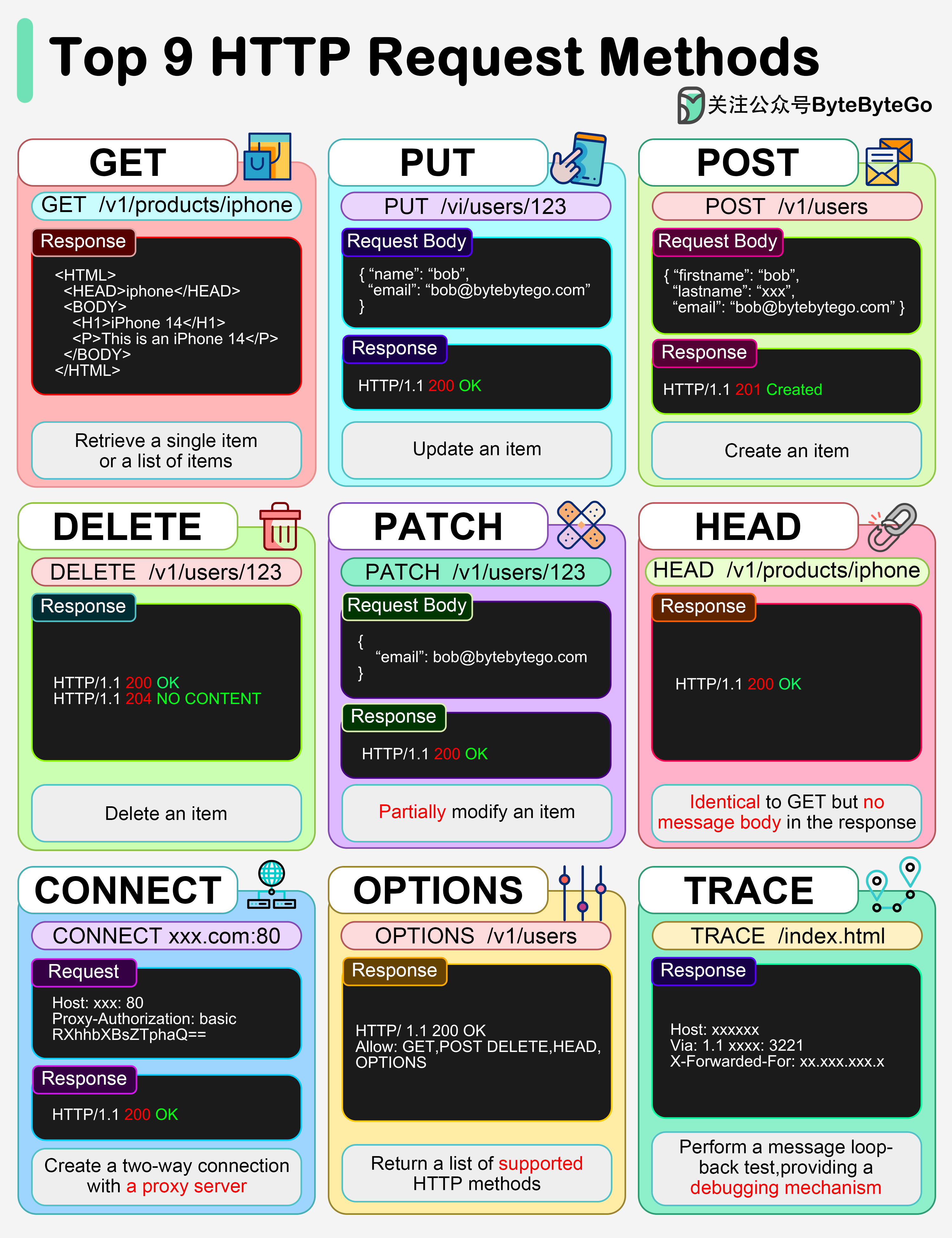 REST APIs leverage standard HTTP methods for operations:
Additional HTTP Methods
- HEAD: Returns response headers without the body (useful for checking if a resource exists)
- OPTIONS: Describes communication options for the target resource
- CONNECT: Establishes a tunnel to the server
- TRACE: Performs a message loop-back test
HTTP Status Codes
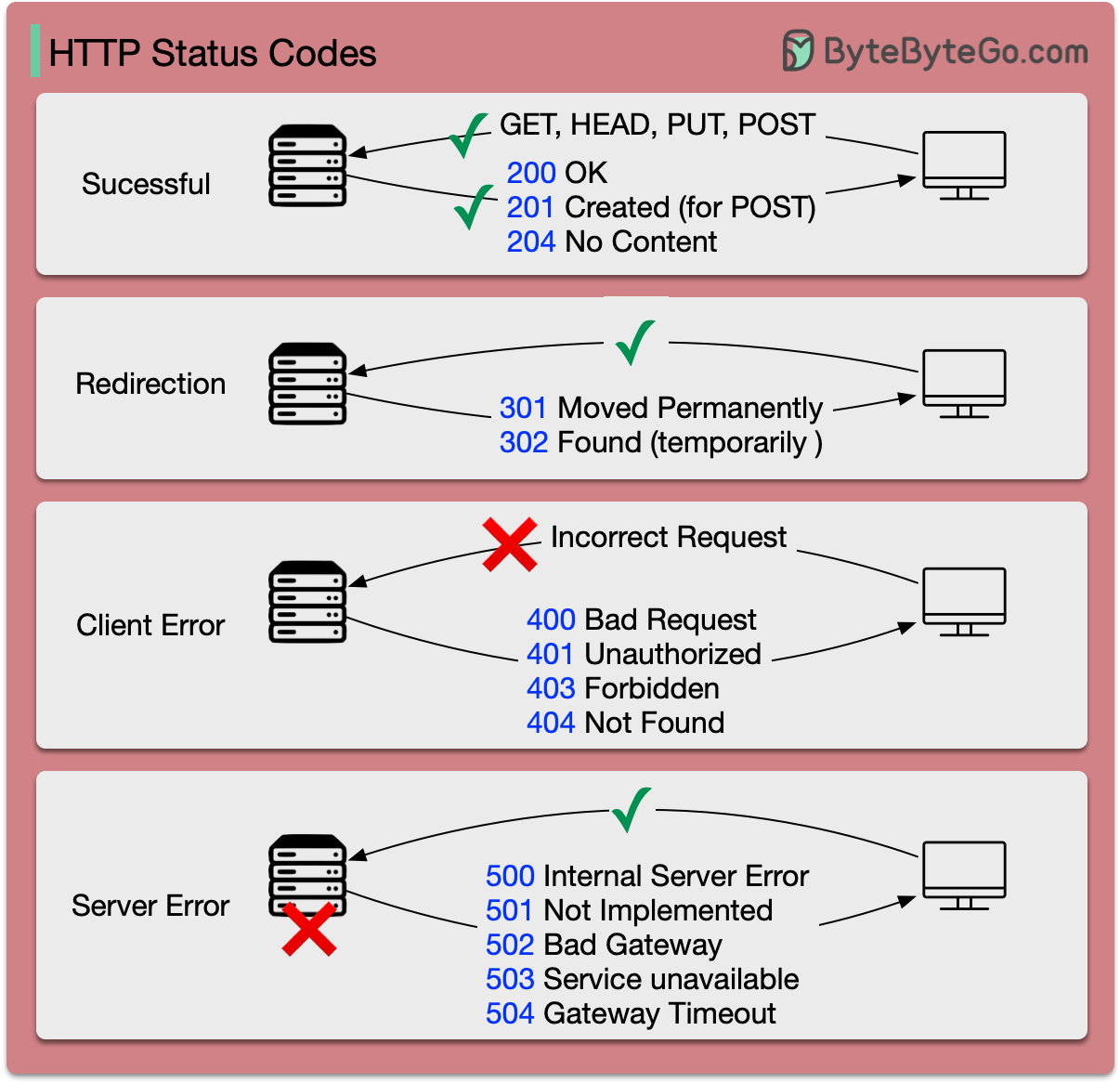 HTTP status codes are divided into five categories:
| Category | Range | Description | Common Examples |
|---|---|---|---|
| Informational | 100-199 | Request received, continuing process | 100 Continue, 101 Switching Protocols |
| Success | 200-299 | Request successfully received and processed | 200 OK, 201 Created, 204 No Content |
| Redirection | 300-399 | Further action needed to complete request | 301 Moved Permanently, 302 Found, 304 Not Modified |
| Client Error | 400-499 | Request contains errors or cannot be fulfilled | 400 Bad Request, 401 Unauthorized, 404 Not Found |
| Server Error | 500-599 | Server failed to fulfill valid request | 500 Internal Server Error, 502 Bad Gateway, 503 Service Unavailable |
REST API Design Best Practices
8 Essential Tips for Efficient API Design
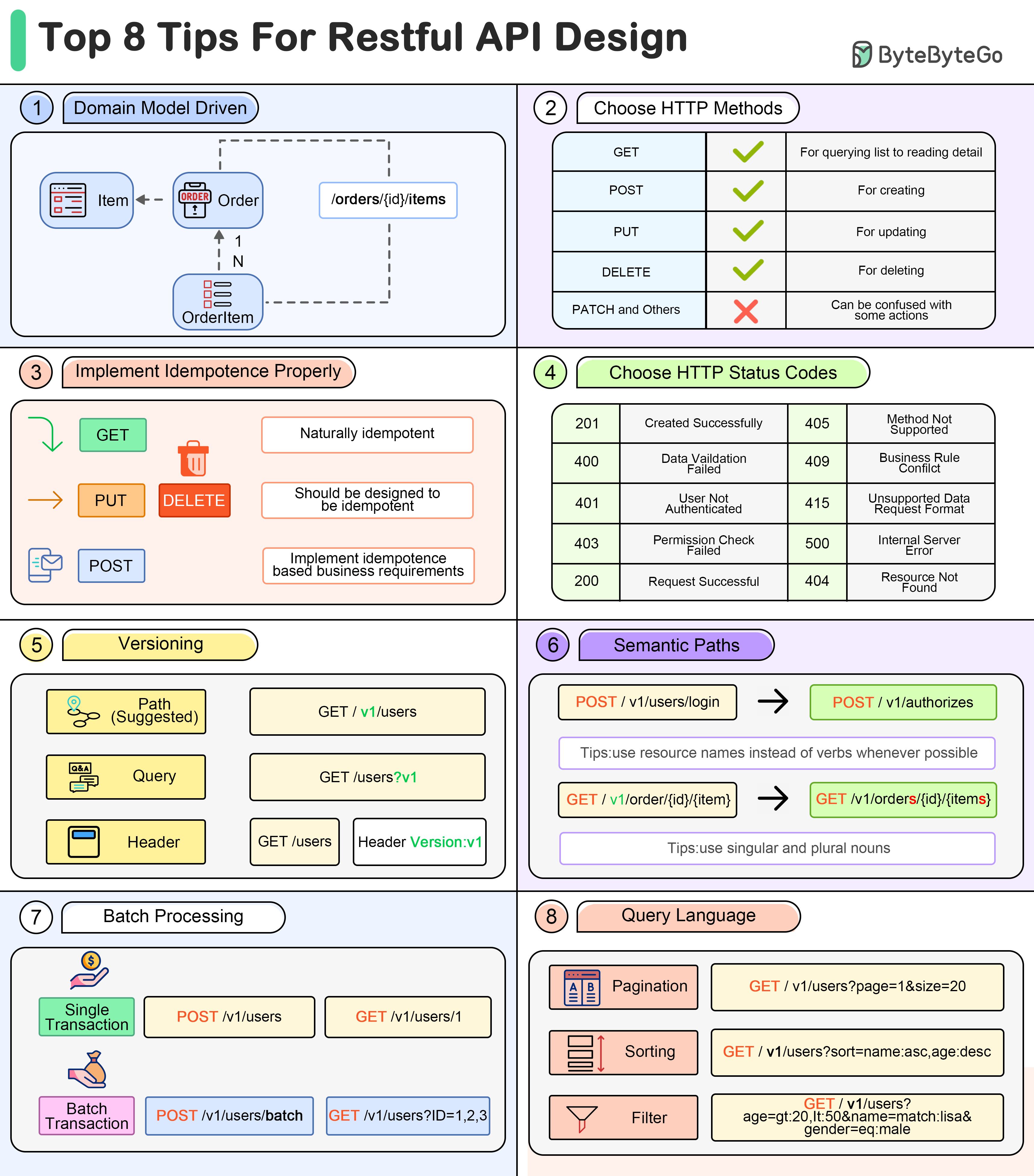
Domain Model Driven
Design your path structure based on your domain model for intuitive resource organization.
Choose Proper HTTP Methods
Use standard HTTP methods consistently. Avoid overcomplicating with methods like PATCH unless necessary.
Implement Idempotence Properly
GET, PUT, and DELETE are naturally idempotent. Design POST operations to be idempotent when possible for improved robustness.
Use Appropriate Status Codes
Define a limited, consistent set of HTTP status codes to simplify client development.
API Security
Authentication Methods
Common authentication approaches for REST APIs:- API Keys: Simple tokens passed in headers or query parameters
- OAuth 2.0: Industry-standard protocol for authorization
- JWT (JSON Web Tokens): Stateless authentication with encoded user information
- Basic Auth: Username and password encoded in Base64 (use only over HTTPS)
Security Best Practices
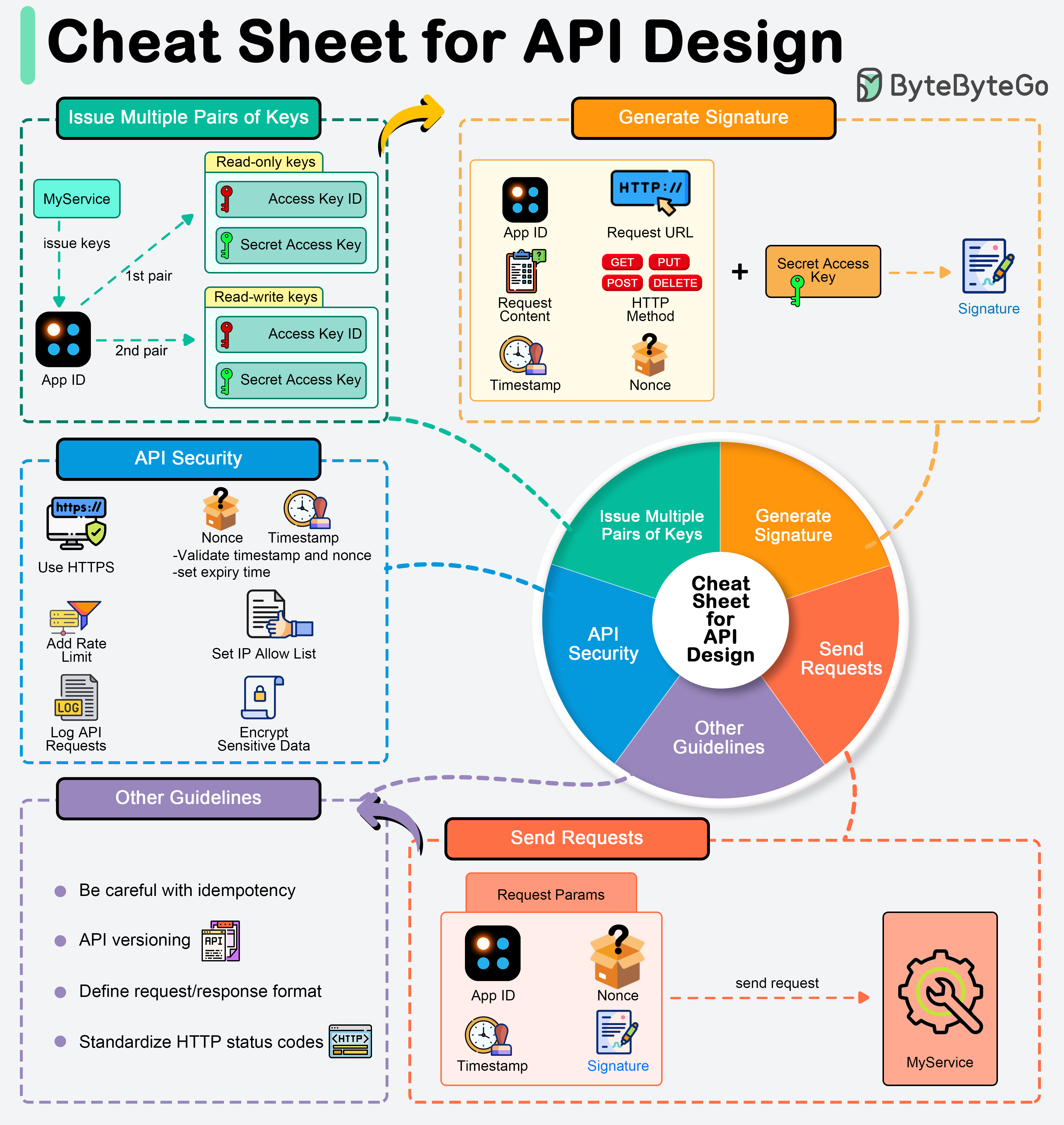
Always use HTTPS to encrypt data in transit and protect against man-in-the-middle attacks.
- Include authentication credentials in every request
- Add timestamps to prevent replay attacks
- Use nonces (random strings) to ensure request uniqueness
- Implement rate limiting to prevent abuse
- Validate all input data
- Never expose sensitive data in URLs
Performance Optimization
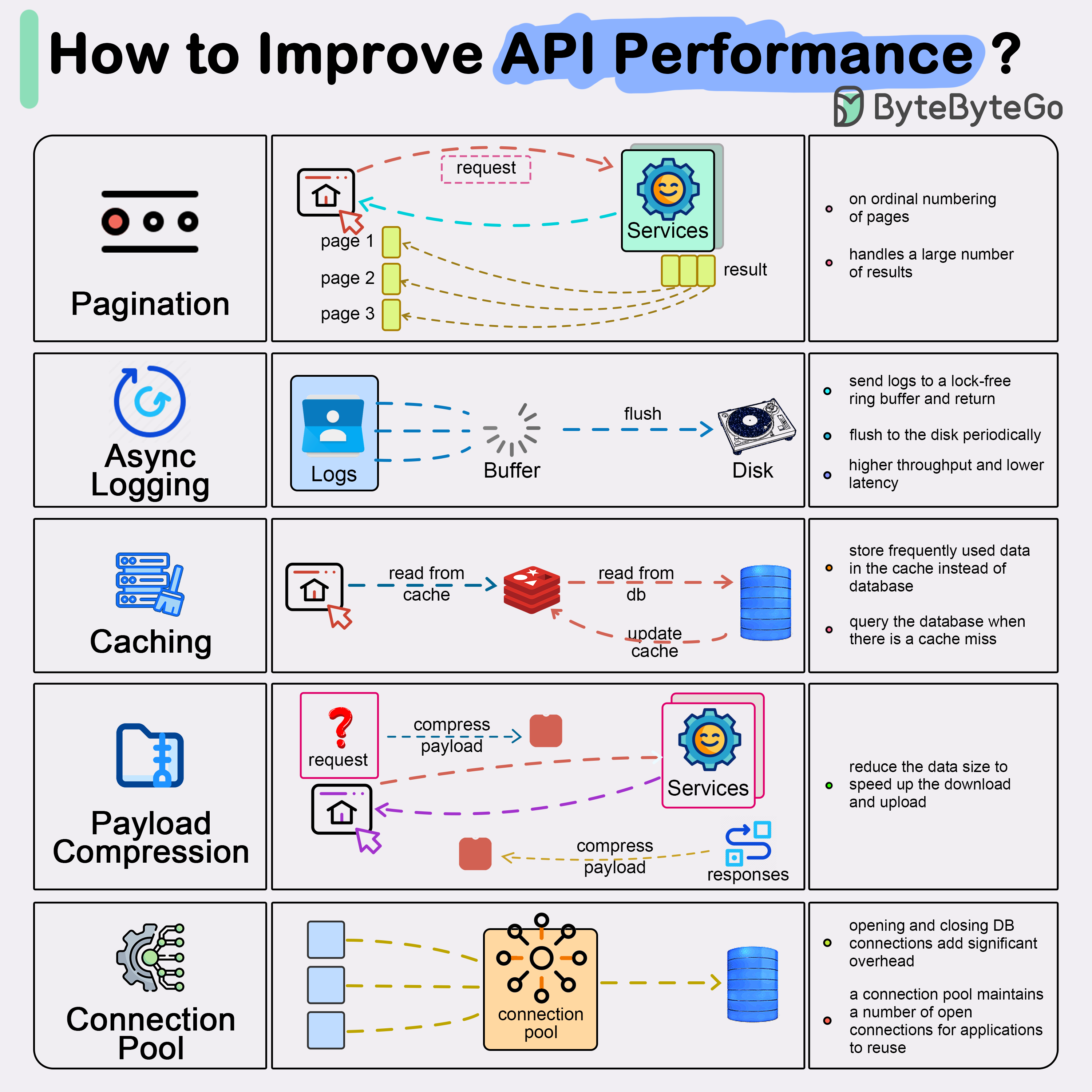
Top 5 Ways to Improve API Performance
Payload Compression
Compress requests and responses using gzip or brotli to reduce transmission time.
REST vs GraphQL
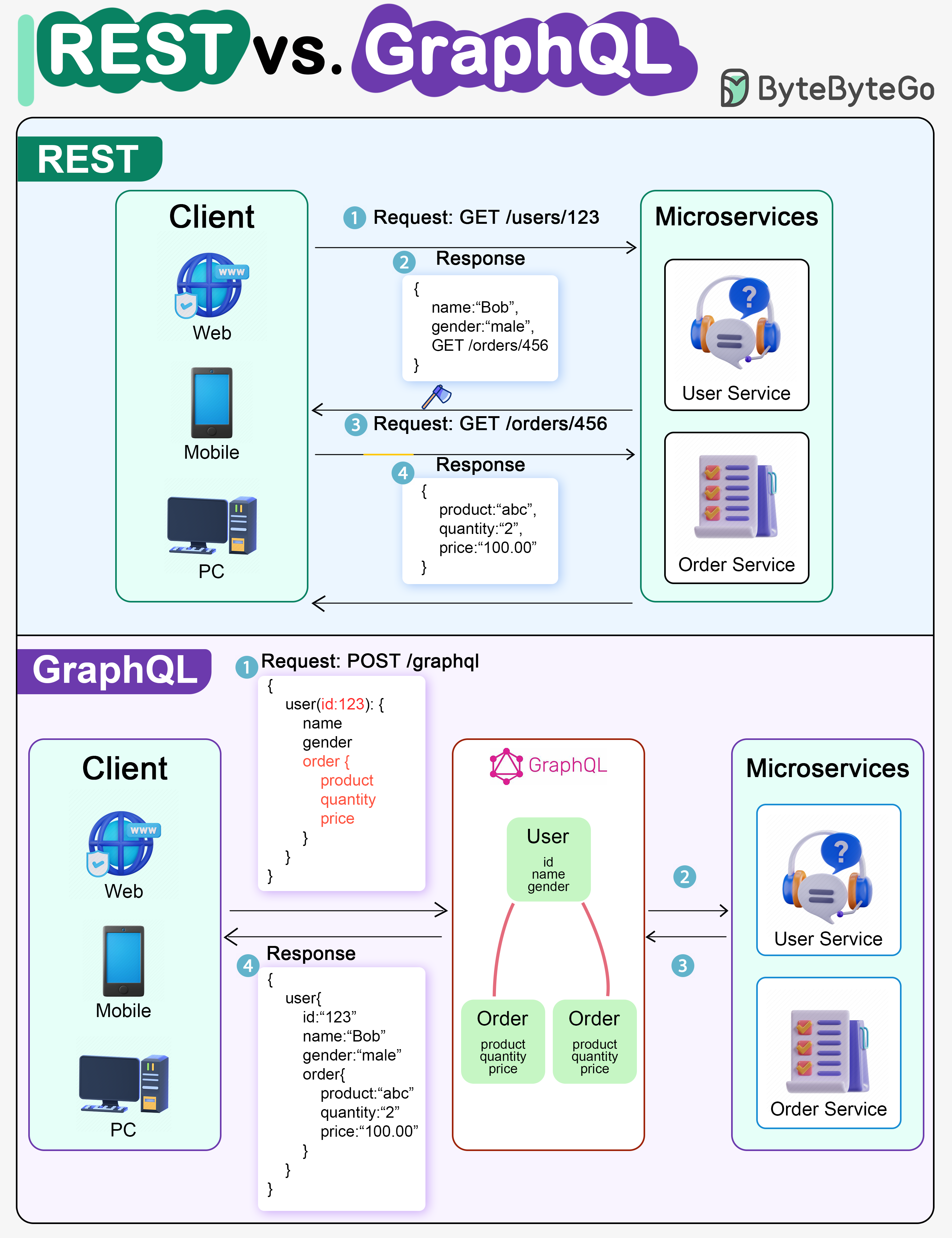
When to Use REST
- Simple, uniform interfaces between services
- Straightforward caching requirements
- Well-defined resource structure
- Public APIs with broad client types
When to Consider GraphQL
- Complex frontend data requirements
- Need to aggregate data from multiple sources
- Rapidly evolving client needs
- Mobile applications requiring precise data fetching
REST excels with simple, consistent contracts, while GraphQL shines with complex, frequently changing frontend requirements.
API Style Comparison
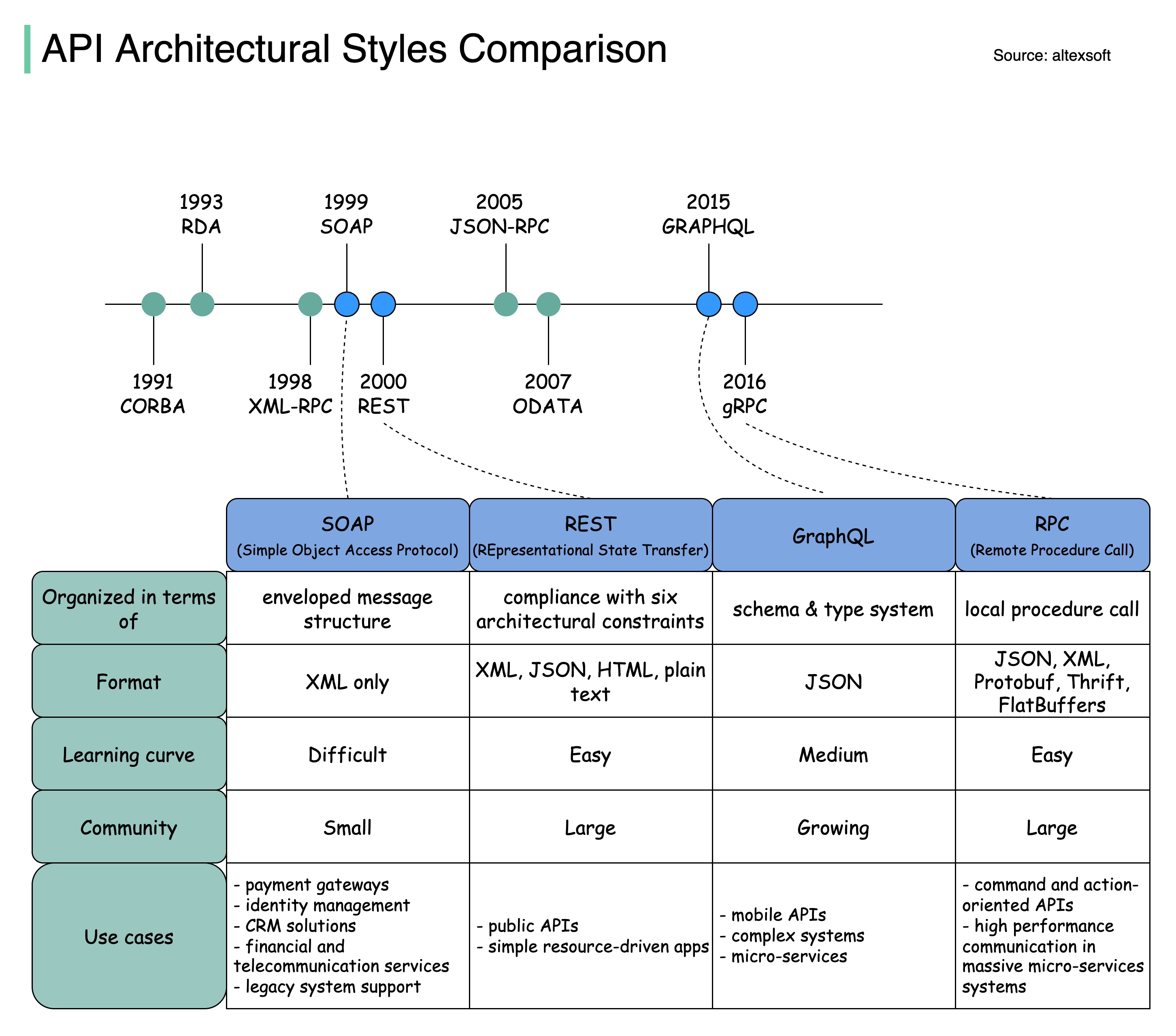 REST is one of several API architectural styles, each with specific use cases:
- SOAP: Enterprise applications requiring strict contracts and transactions
- REST: Web services, public APIs, microservices
- GraphQL: Complex data requirements, mobile applications
- gRPC: High-performance microservices, real-time communication
Practical Examples
Complete User Management API
Key Takeaways
REST APIs remain the most popular choice for web services due to their simplicity, scalability, and compatibility with HTTP infrastructure.
- REST uses standard HTTP methods and status codes for intuitive API design
- Stateless architecture improves scalability and reliability
- Proper design patterns and security practices are essential
- Performance optimization through caching, compression, and pagination
- Choose REST for straightforward, cacheable, resource-based APIs