Mintlify saves your team time and money, and now we can show you how.
3 minutes read
Neha Halebeed
Product
Share this article
Neha Halebeed
Product
Share this article

Mintlify Analytics now includes Savings, which quantifies the time saved from automations and the money saved from assistant conversations that never became support tickets. Here's how we calculate each number.
Documentation teams know their work matters, but without the right metrics, it's a struggle to show stakeholders how the work translates to real business results. In our State of Knowledge report, 47% of teams said they haven't measured the impact of their documentation.
I am an analytics fanatic. It started as an obsession with color, numbers, and graphs and slowly turned into questioning how these can provide insights that help people learn more and make decisions. Giving Mintlify customers clear, actionable insight displayed on beautifully designed charts into how their project performs is both a business priority and a personal interest of mine.
If you're new to Mintlify Analytics, it already covers Traffic, Assistant, Search, Automations, User engagement, and Feedback. Savings builds on top of that data to answer a different question: what value is Mintlify bringing your team, even for teammates who don't use the product directly? Team members using the application may speak positively and advocate for the platform, but having numbers that back it up makes that conversation easier to report and support.
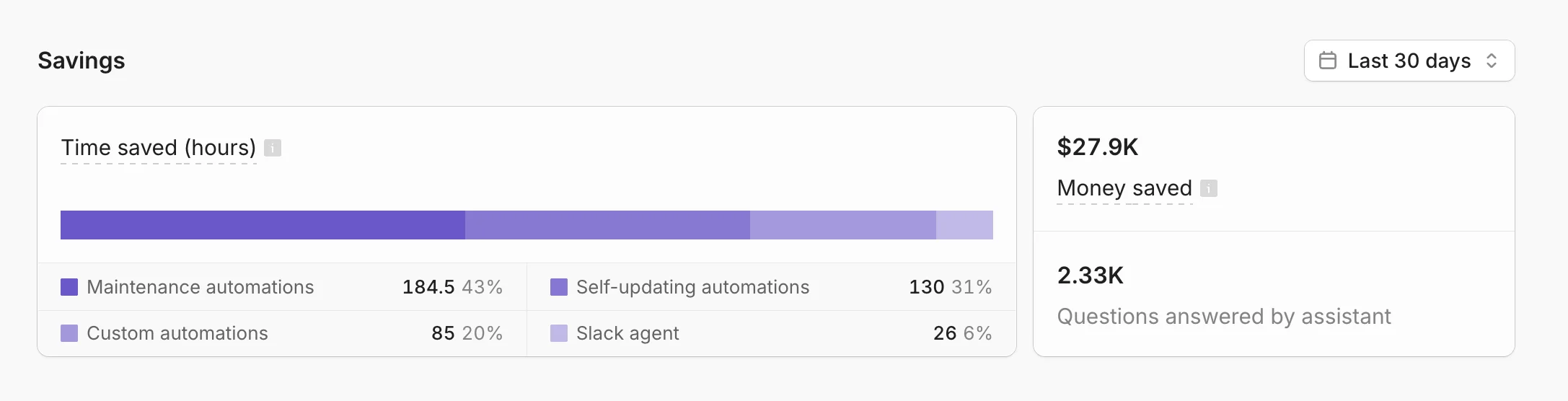
The Savings section shows the quantifiable value Mintlify brings your team. You can see the time saved from automations and assistant usage as well as money saved from assistant conversations.
How we measure savings
Money saved is the simplest calculation. We use an industry-standard cost of $12 per deflected assistant conversation. A conversation is deflected when the assistant answers the question and it doesn't turn into a support query, which would have cost your team time, and consequently money.
Time saved was where we thought hardest about the best way to measure, since there's no standard in the market right now. If your team is looking for one, feel free to use our reasoning and make it the standard.
For every PR that is merged and was created by an automation, we evaluate the lines of code generated by the PR and bucket it into a t-shirt size: small, medium, or large. Based on the bucket, we assign a rough time savings.
You may ask: why not have it be a time savings per line rather than buckets? We thought through the insights we were producing, and if we go line by line we can't give a picture that anyone on your team can easily decipher. Buckets let you quickly gather the impact from the time saved. We only count time saved from automations that are merged. Otherwise, no harm no foul, but we weren't able to save your team time.
As we learn how accurate this valuation feels to customers, we plan to convert time saved into money saved, based on the time an equivalent action would take and factoring in the agentic era and review time.
We're also building Attribution analytics so your team can see the value your Mintlify site brings to your team and customers. What would you like to see in Analytics next? Let us know on the roadmap.
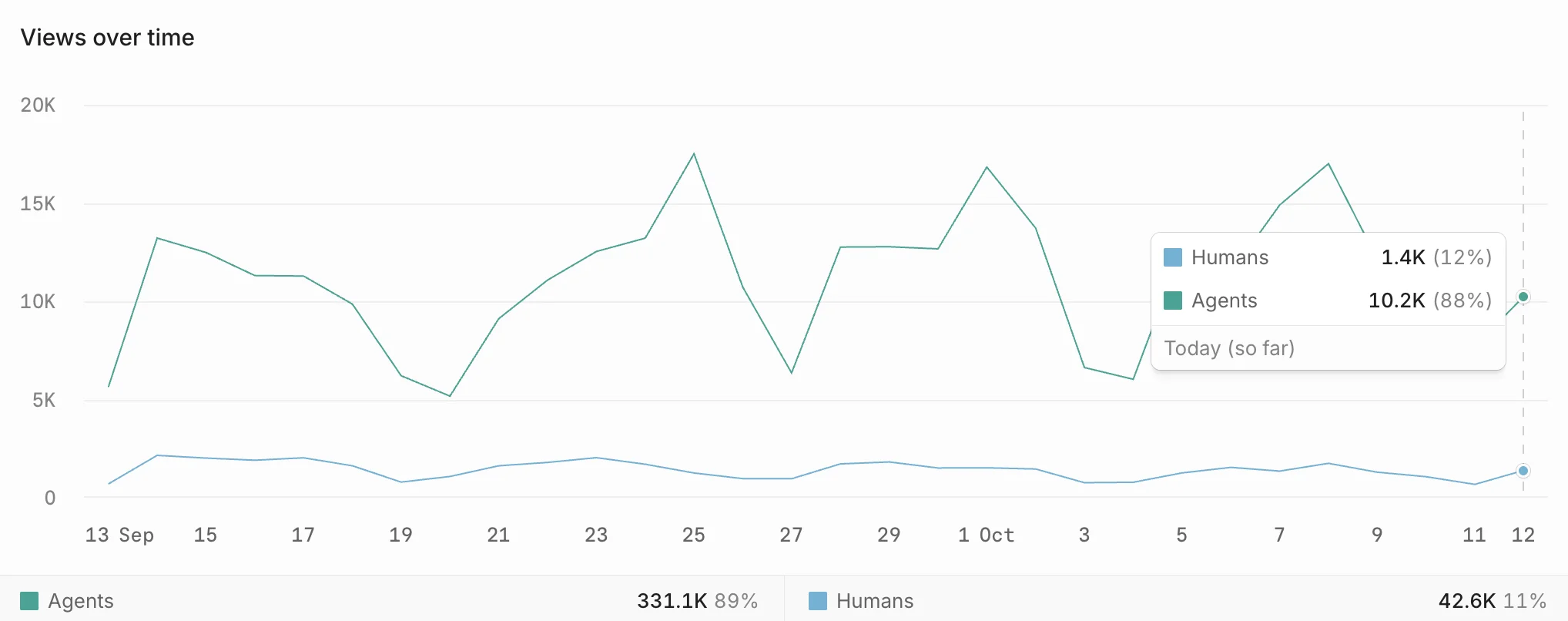
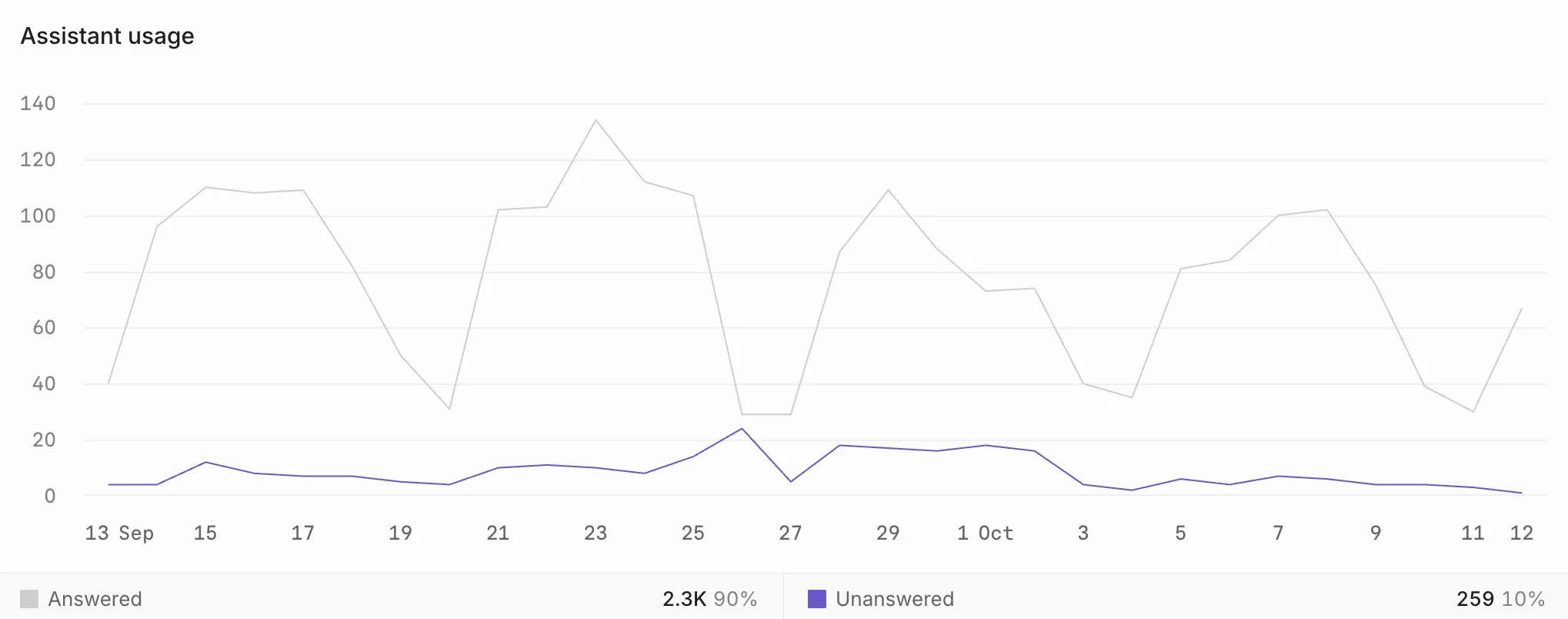
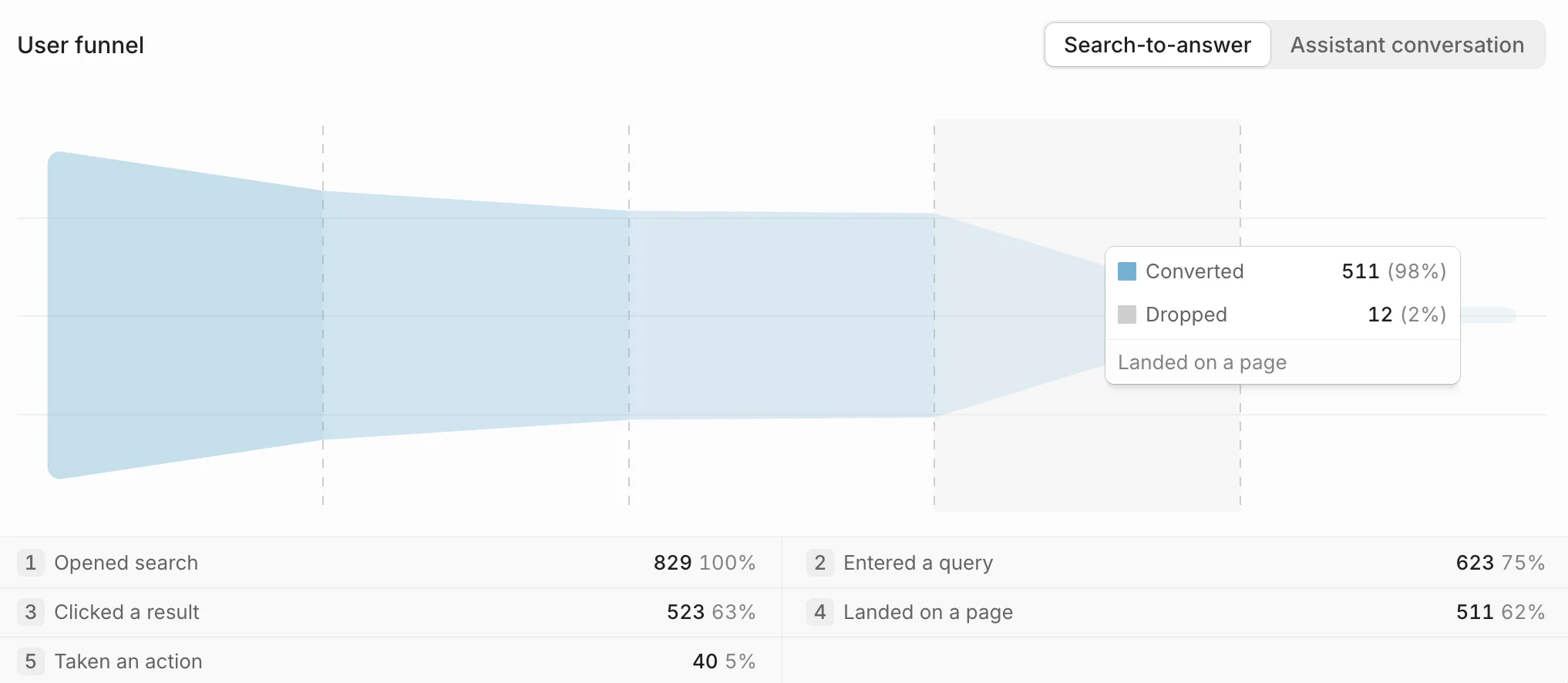
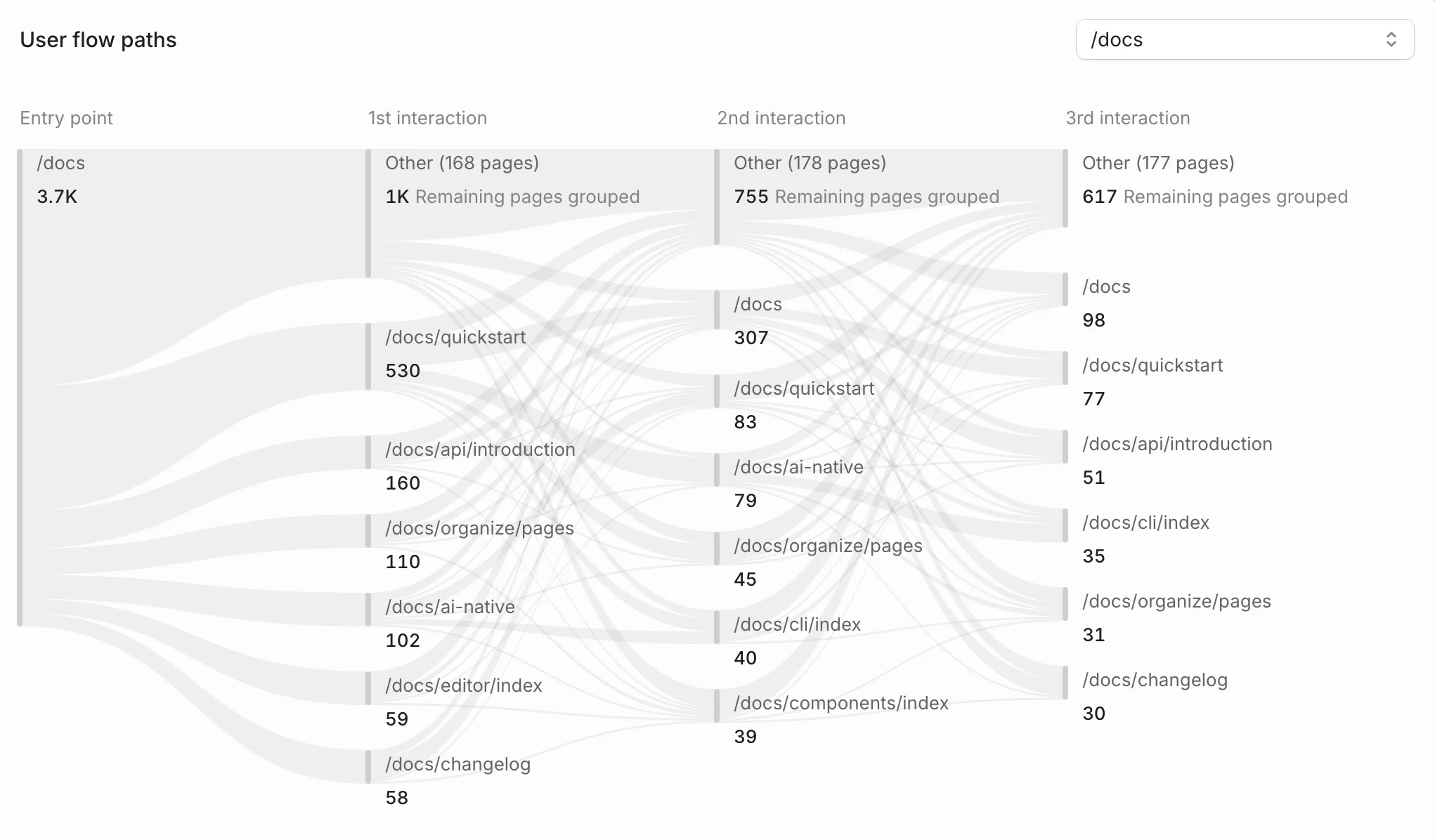
A look at some of the rest of Analytics
More blog posts to read
Less is more: Improving editor performance
The Mintlify editor now opens, navigates, and edits very large pages up to 100x faster by doing less work.
October 14, 2026Hunter Chen
Engineering
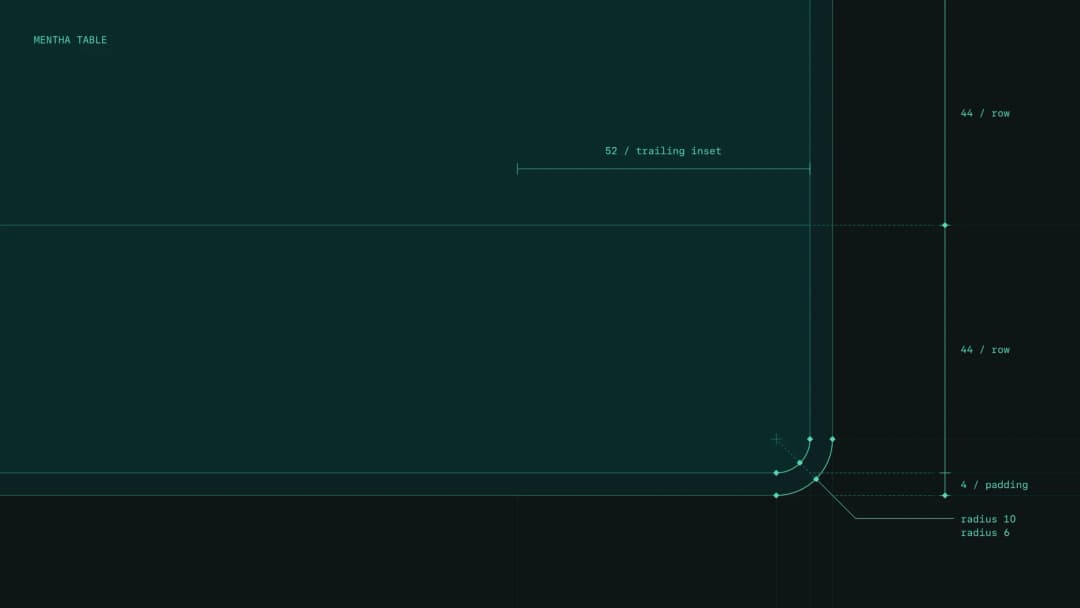
Inside Mentha, Mintlify's new design system
Mentha is Mintlify's new design system, built with constraints, baked-in patterns, a cooler mint palette, and agents in mind.
October 12, 2026Fay Dakrouri
Design