What is an API Gateway?
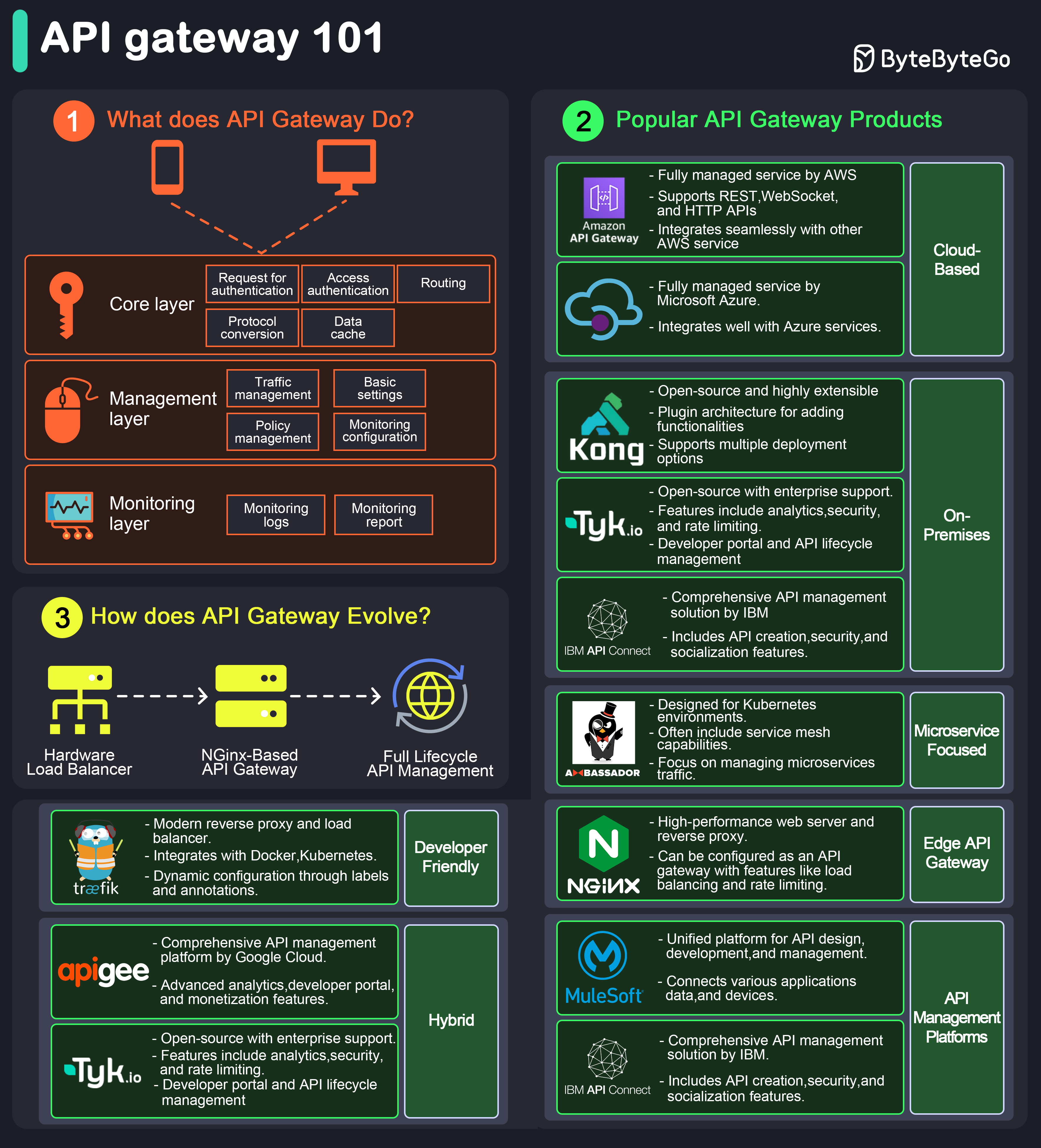 An API gateway is a server that acts as an API front-end, receiving API requests, enforcing throttling and security policies, passing requests to the back-end service, and then returning the appropriate result to the client.
The API Gateway is essentially a middleman between the client and the server, managing and optimizing API traffic.
Key Functions of an API Gateway
Request Routing
Directs incoming API requests to the appropriate backend service based on request path, headers, or other criteria.Load Balancing
Distributes requests across multiple server instances to ensure no single server is overwhelmed, improving reliability and performance.Security
Implements comprehensive security measures:- Authentication: Verifies user identity
- Authorization: Validates user permissions
- Data Encryption: Protects data in transit
- Threat Detection: Identifies and blocks malicious requests
Rate Limiting and Throttling
Controls the number of requests a client can make within a certain period to prevent abuse and ensure fair resource allocation.API Composition
Combines multiple backend API requests into a single frontend request to optimize performance and reduce client complexity.Caching
Stores responses temporarily to reduce the need for repeated processing, improving response times and reducing backend load.How an API Gateway Works
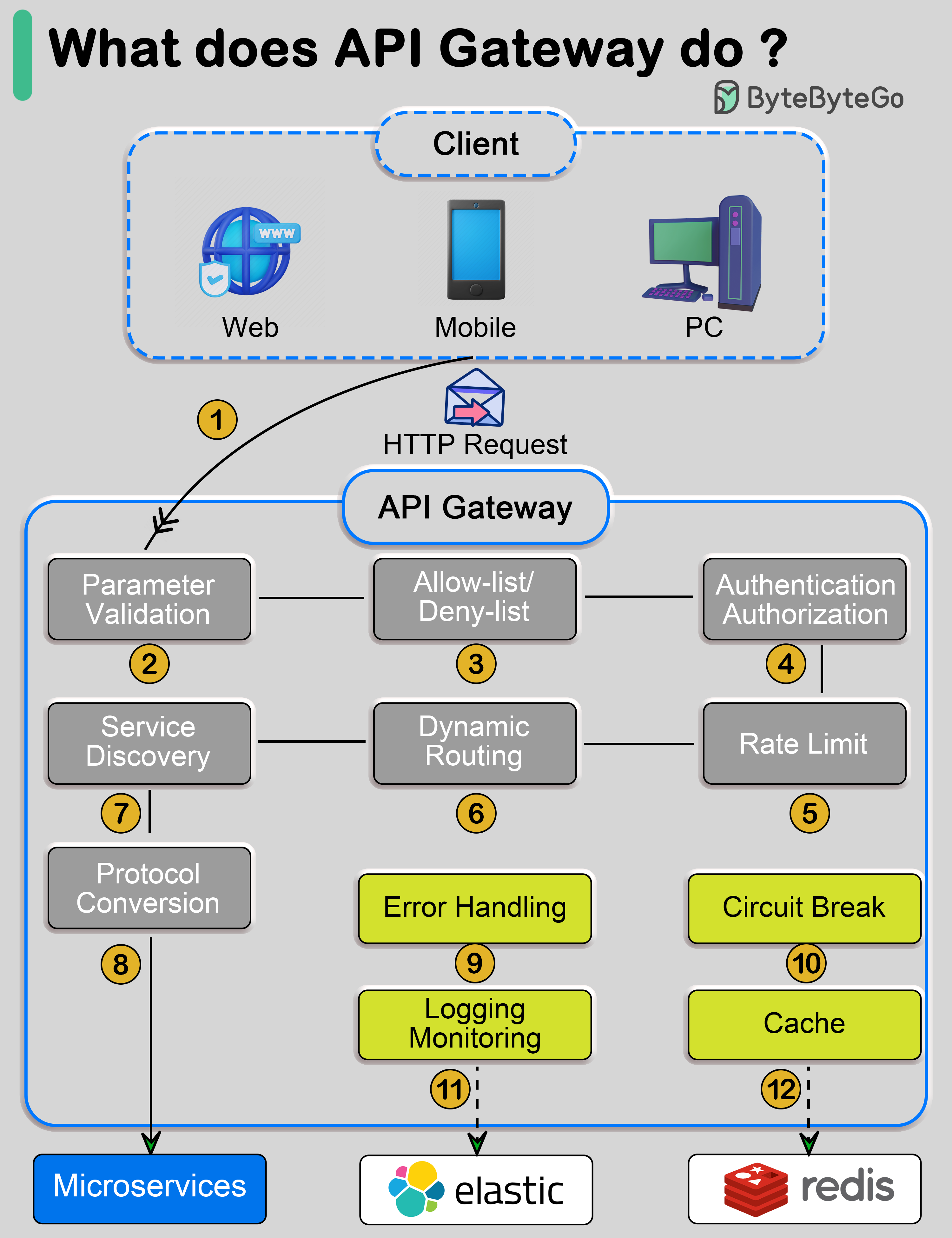
Authentication & Authorization
The API gateway talks to an identity provider for authentication and authorization.
- Validates tokens (JWT, OAuth)
- Checks user permissions
- Enforces access policies
Rate Limiting
Rate limiting rules are applied to the request. If over the limit, the request is rejected with a 429 (Too Many Requests) status.
Service Discovery & Routing
The gateway finds the relevant service to route to by path matching or service registry lookup.
Protocol Transformation
The API gateway transforms the request into the appropriate protocol and sends it to backend microservices.
- REST to gRPC
- HTTP to WebSocket
- JSON to Protocol Buffers
Top API Gateway Use Cases
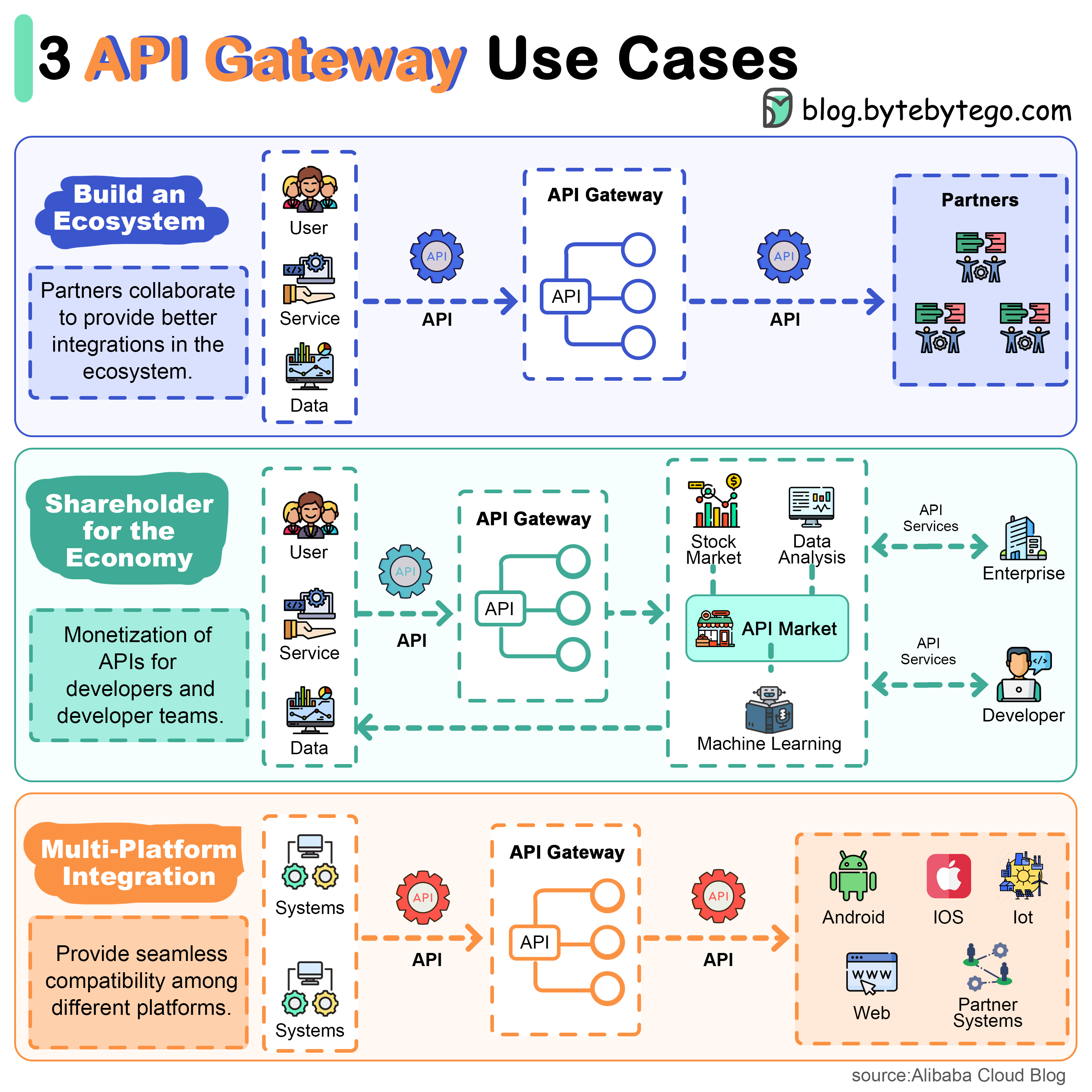
1. Building an Ecosystem
API gateways help create integrated ecosystems where multiple partners and services collaborate.Users can leverage an API gateway to access a wider set of tools, while partners collaborate to provide better integrations.
- Unified access point for multiple services
- Consistent authentication across partners
- Centralized analytics and monitoring
- Easier partner onboarding
2. API Marketplace
The API marketplace hosts fundamental functionalities for everyone, enabling developers and businesses to easily develop, innovate, and sell APIs. Features:- API discovery and documentation
- Usage tracking and billing
- Developer portal
- API versioning and lifecycle management
3. Multi-Platform Compatibility
When dealing with multiple platforms (mobile, web, IoT), an API gateway helps work across complex architectures. Platform-Specific Features:- Mobile-optimized responses (reduced payload)
- Web-specific formatting
- IoT device protocol translation
- Platform-specific rate limits
API Gateway vs Load Balancer
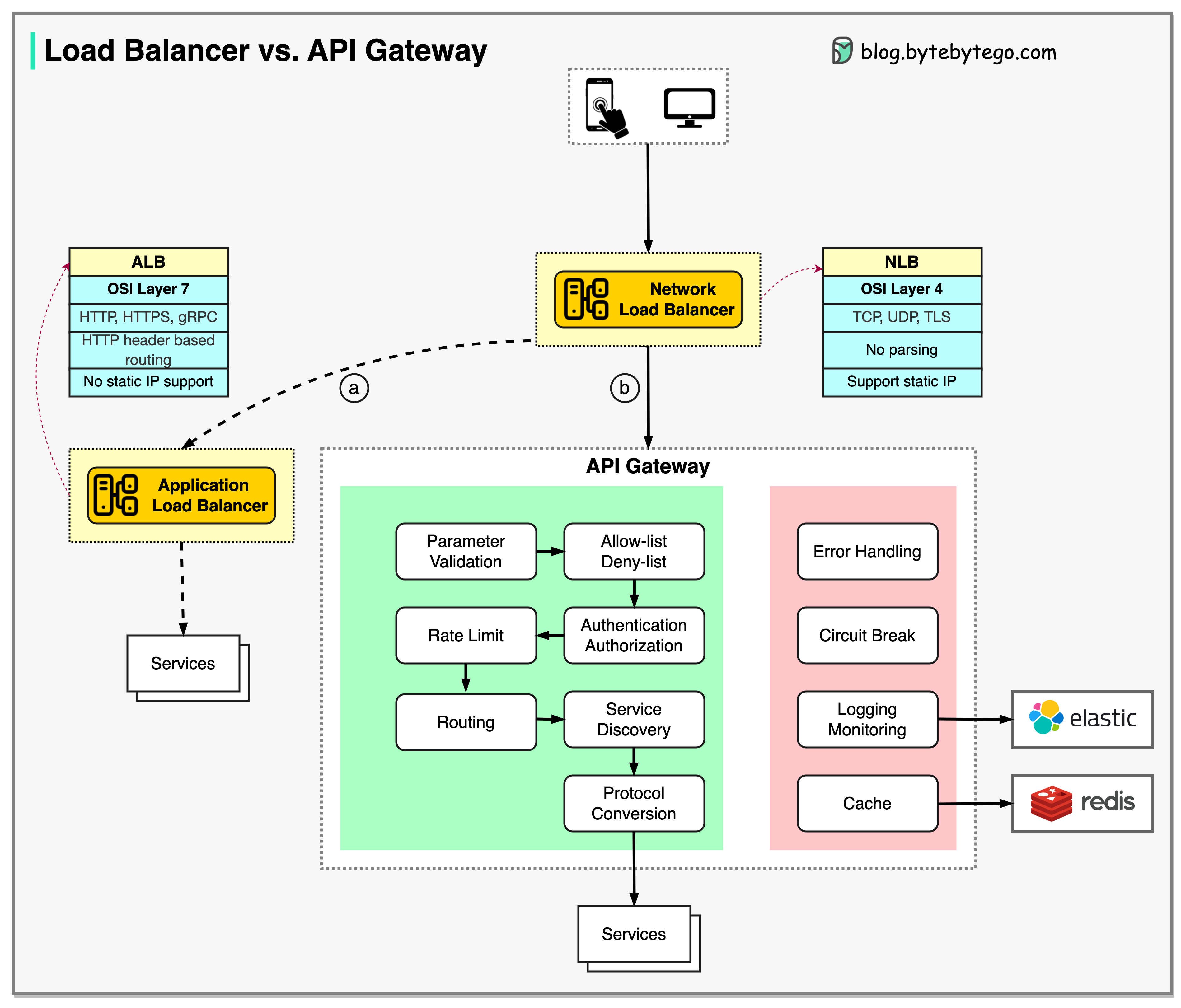
Network Load Balancer (NLB)
- Operates at Layer 4 (Transport Layer)
- Routes based on IP address and TCP/UDP ports
- Does not parse HTTP requests
- Simple traffic distribution
- High performance, low latency
Application Load Balancer (ALB)
- Operates at Layer 7 (Application Layer)
- Routes based on HTTP headers, URLs, paths
- Provides richer routing rules
- Can inspect request content
- Suitable for HTTP/HTTPS traffic
API Gateway
- Application-level functionality
- Authentication and authorization
- Rate limiting and throttling
- Request/response transformation
- API composition and aggregation
- Caching and analytics
Common Architectures
API Gateway vs Reverse Proxy
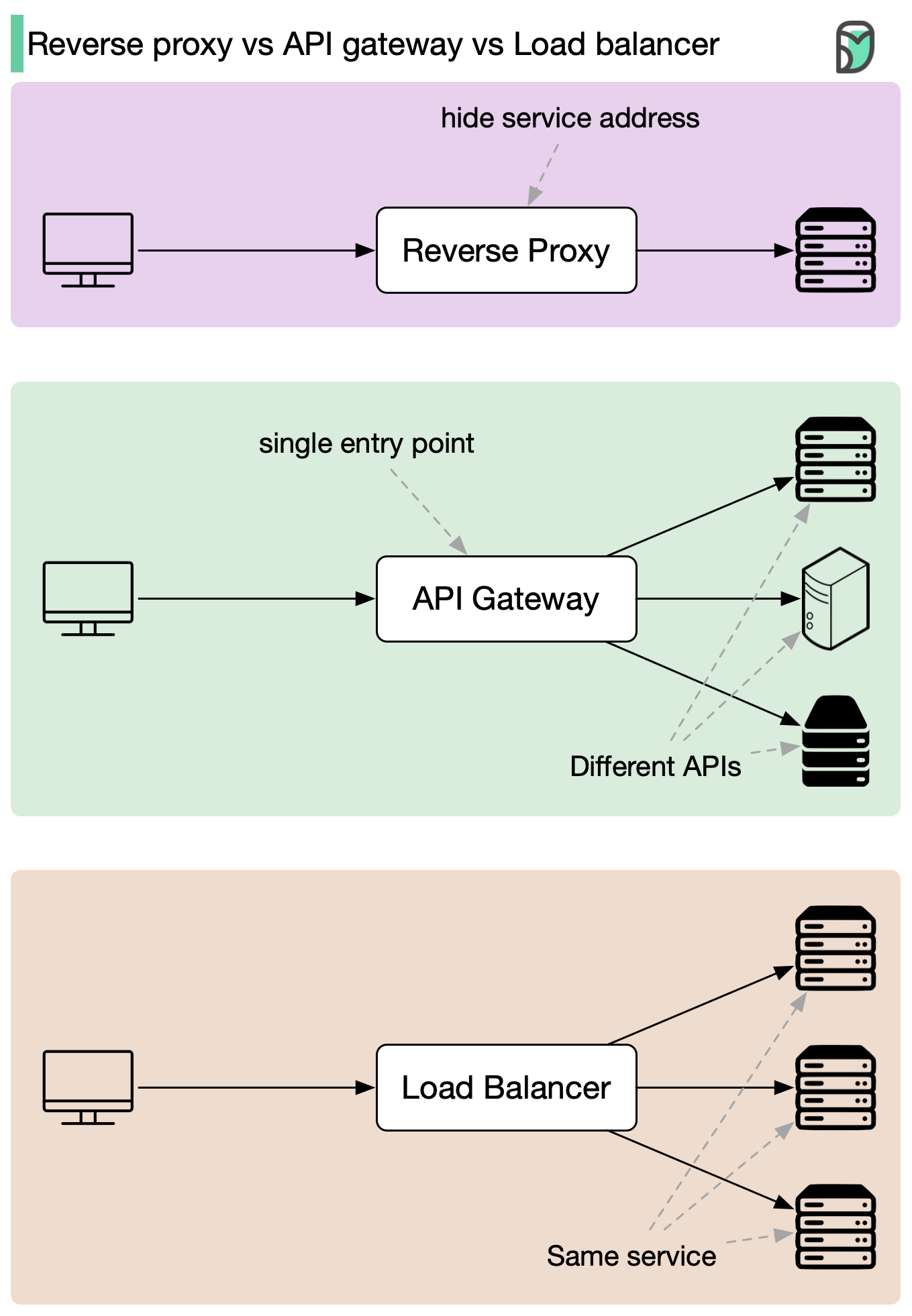
| Component | Primary Function | Best For |
|---|---|---|
| Reverse Proxy | Change identity, shield servers | Security, hiding server details |
| API Gateway | Postman for services | Microservices, complex routing |
| Load Balancer | Traffic cop | High traffic, even distribution |
When to Use Each
- Reverse Proxy: For stealth and security, protecting sensitive servers
- API Gateway: For organized service communication with rich features
- Load Balancer: For traffic control and high availability
Often, it’s wise to use all three together - they make a super team that keeps your digital infrastructure safe and efficient.
Common API Gateway Features
Authentication & Authorization
Rate Limiting Strategies
Request Transformation
Circuit Breaking
Popular API Gateway Solutions
Cloud-Based
- AWS API Gateway: Fully managed, integrates with AWS services
- Azure API Management: Enterprise features, hybrid deployment
- Google Cloud API Gateway: Serverless, integrated with GCP
- Kong: Open-source, plugin architecture, cloud-native
Self-Hosted
- NGINX: High performance, widely used reverse proxy
- Envoy: Modern, cloud-native, service mesh integration
- Traefik: Container-native, automatic service discovery
- Tyk: Open-source, GraphQL support, analytics
Framework-Specific
- Spring Cloud Gateway: Java/Spring ecosystem
- Express Gateway: Node.js based, microservices focus
- Ocelot: .NET Core, lightweight
- Zuul: Netflix OSS, deprecated but still used
API Gateway Design Patterns
Backend for Frontend (BFF)
- Optimized for each client type
- Different data formats and protocols
- Client-specific caching strategies
API Aggregation
Service Discovery
Best Practices
Use Async Processing for Heavy Operations
Return immediately for long-running tasks, provide status endpoints.
Security Best Practices
API Key Management
Request Signing
Input Validation
- Validate request size limits
- Sanitize input data
- Check content types
- Prevent SQL injection and XSS
- Validate JSON schemas
Monitoring and Observability
Key Metrics to Track
- Request Rate: Requests per second
- Error Rate: 4xx and 5xx responses
- Latency: P50, P95, P99 response times
- Availability: Uptime percentage
- Cache Hit Ratio: Cache effectiveness
- Backend Health: Service availability
Alerting
Key Takeaways
API Gateways are essential for managing microservices architectures, providing a single entry point with security, routing, and operational capabilities.
- API Gateway acts as the front door for all API requests
- Centralizes cross-cutting concerns like authentication, rate limiting, and logging
- Enables API composition and protocol transformation
- Different from load balancers (Layer 4/7) - operates at application level
- Essential for microservices architectures and API management
- Choose based on your needs: cloud-managed vs self-hosted solutions