What is gRPC?
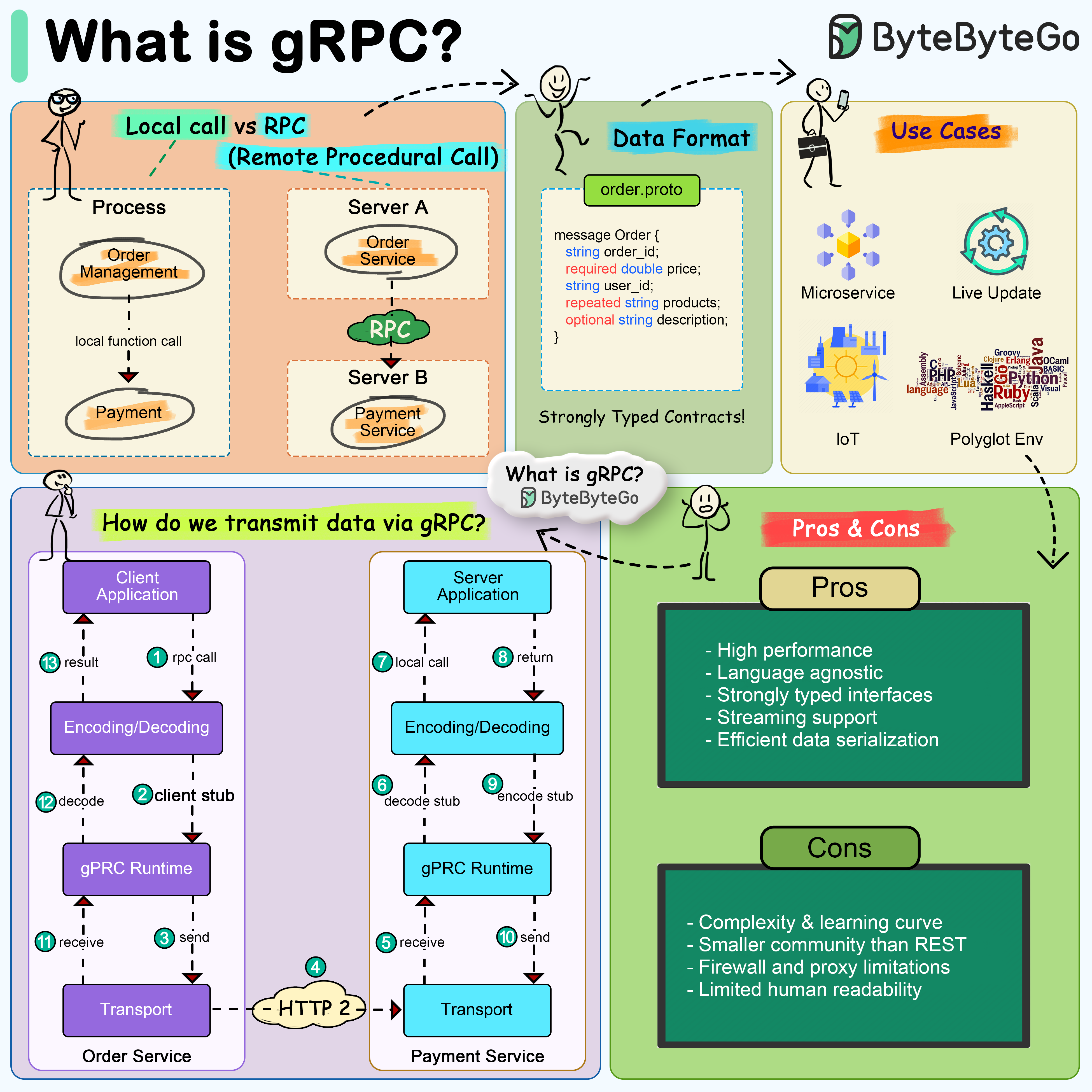 gRPC is a high-performance, open-source universal RPC (Remote Procedure Call) framework initially developed by Google. It leverages HTTP/2 for transport, Protocol Buffers as the interface description language, and provides features such as authentication, load balancing, and more.
gRPC enables efficient and robust communication between services in a microservices architecture, making it a popular choice for building distributed systems and internal APIs.
What is RPC?
RPC (Remote Procedure Call) is called “remote” because it enables communications between remote services when services are deployed to different servers under microservice architecture. From the user’s point of view, it acts like a local function call. This abstraction makes distributed systems easier to build and maintain, as developers can write code that appears to call local functions while actually communicating across the network.How gRPC Works
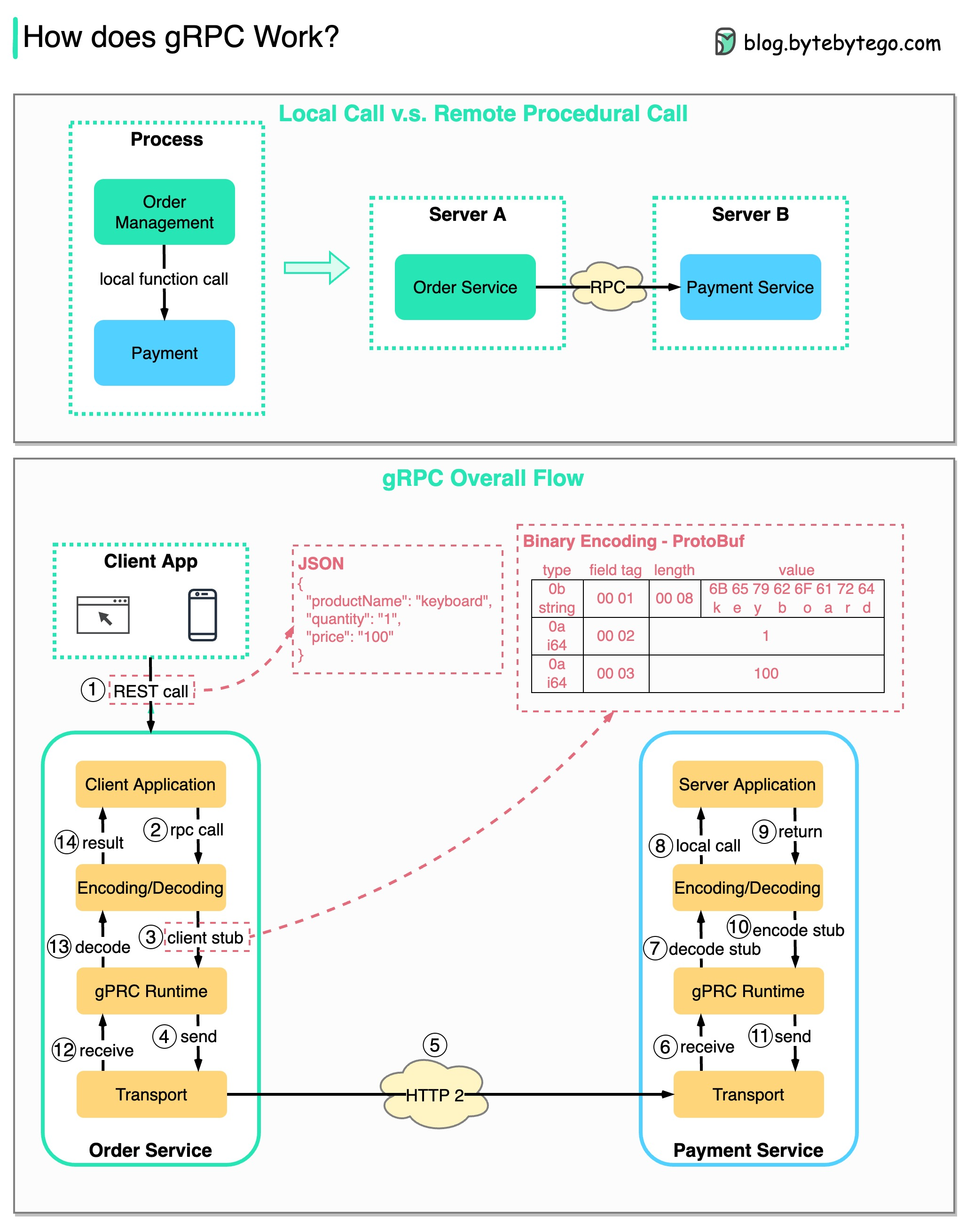 The diagram illustrates the overall data flow for gRPC:
Client Transformation
The order service (gRPC client) receives the REST call, transforms it, and makes an RPC call to the payment service.gRPC encodes the client stub into a binary format and sends it to the low-level transport layer.
Network Transmission
gRPC sends the packets over the network via HTTP/2.Because of binary encoding and network optimizations, gRPC is said to be 5X faster than JSON.
Server Processing
The payment service (gRPC server) receives the packets from the network, decodes them, and invokes the server application.
Response Encoding
The result is returned from the server application, gets encoded, and sent to the transport layer.
Key Features of gRPC
Protocol Buffers (protobuf)
By default, gRPC uses Protocol Buffers as its Interface Definition Language (IDL).Protocol Buffers make gRPC messages smaller and faster compared to JSON or XML.
- Binary serialization format (more compact than text)
- Strongly typed schema
- Backward and forward compatibility
- Auto-generated code in multiple languages
- Faster serialization/deserialization
HTTP/2 Based Transport
gRPC uses HTTP/2 for transport, providing many improvements over HTTP/1.x:- Multiplexing: Multiple requests/responses over a single connection
- Binary Protocol: More efficient parsing
- Header Compression: Reduced overhead
- Server Push: Proactive data sending
- Stream Prioritization: Control resource allocation
Multiple Language Support
gRPC supports a wide range of programming languages:- C++, Java, Python, Go
- C#, Node.js, Ruby, PHP
- Dart, Kotlin, Objective-C
- And many more through community plugins
Bi-Directional Streaming
gRPC supports four types of communication:Protocol Buffers Example
Defining a Service
Generated Code Usage
gRPC Communication Patterns
Unary RPC (Request-Response)
Most similar to traditional REST API calls:- Simple CRUD operations
- Authentication requests
- Configuration retrieval
Server Streaming RPC
Client sends one request, server responds with a stream:- Large dataset retrieval
- Real-time notifications
- Log streaming
- Stock price updates
Client Streaming RPC
Client sends a stream of requests, server responds once:- File uploads
- Batch data submission
- Sensor data collection
Bidirectional Streaming RPC
Both client and server send streams independently:- Chat applications
- Real-time collaboration
- Live video/audio streaming
- Gaming
Advantages of gRPC
Performance
- 5X faster than JSON: Binary serialization is more efficient
- Smaller payload size: Protocol Buffers are compact
- HTTP/2 multiplexing: Multiple requests on one connection
- Lower latency: Reduced network overhead
Developer Productivity
- Auto-generated code: Client and server code from .proto files
- Strong typing: Compile-time type checking
- Cross-language support: Polyglot microservices
- Built-in features: Authentication, load balancing, timeouts
Scalability
- Streaming support: Efficient for large datasets
- Load balancing: Built-in client-side load balancing
- Connection pooling: Efficient resource usage
- Backpressure: Flow control mechanisms
Disadvantages of gRPC
Limited Browser Support
gRPC is not natively supported in browsers. gRPC-Web exists but requires a proxy.
- Cannot call gRPC services directly from browsers
- Requires gRPC-Web proxy (e.g., Envoy)
- Not ideal for public-facing APIs
Human Readability
- Binary format is not human-readable
- Requires special tools to inspect messages
- Debugging can be more challenging
- Not suitable for public APIs where transparency is needed
Learning Curve
- Requires learning Protocol Buffers
- More complex than REST
- Additional tooling needed
- Team training required
gRPC vs REST vs GraphQL
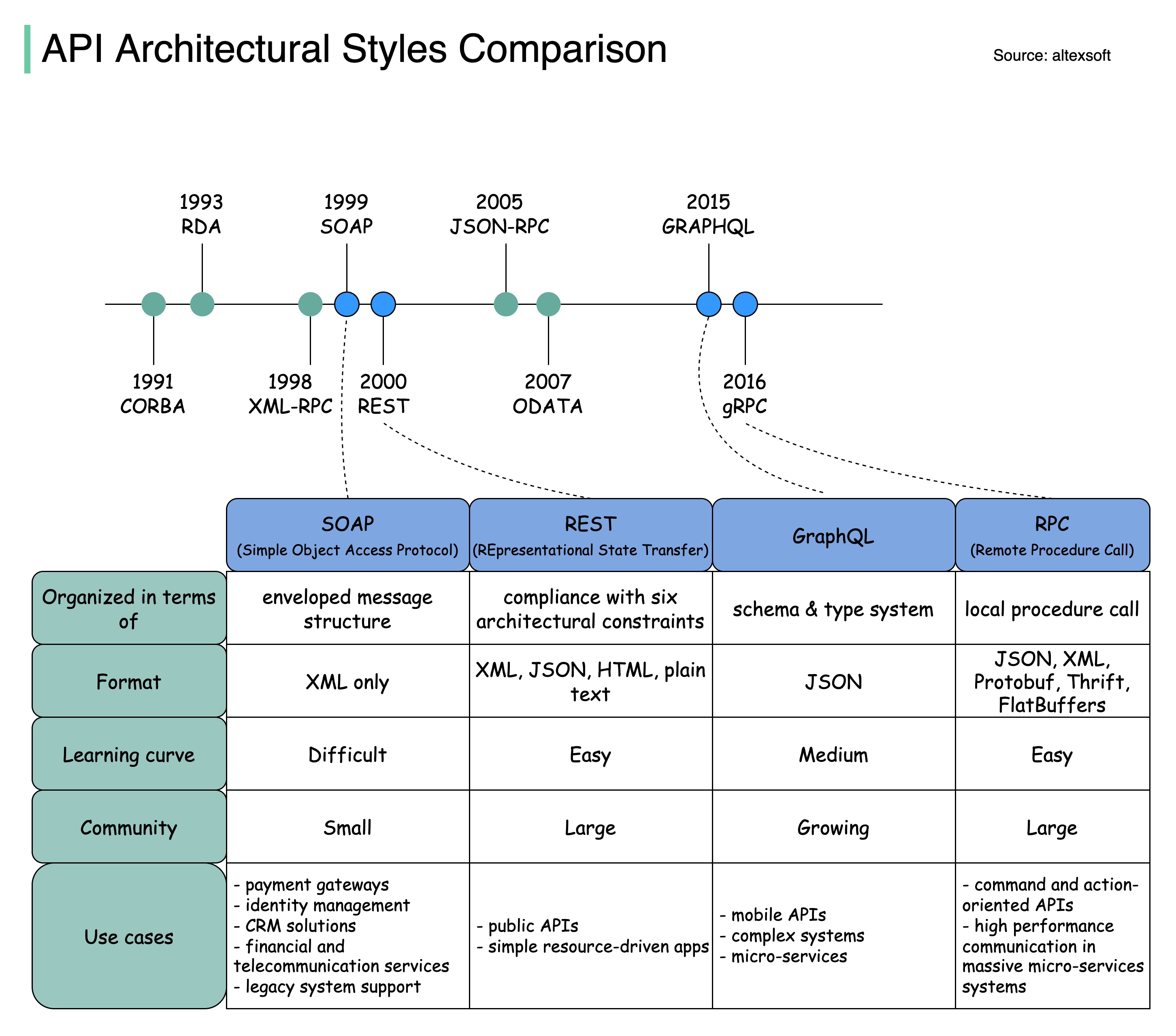
| Aspect | gRPC | REST | GraphQL |
|---|---|---|---|
| Protocol | HTTP/2 | HTTP/1.1 | HTTP/1.1+ |
| Data Format | Protocol Buffers | JSON | JSON |
| Performance | Very High | Moderate | Moderate |
| Browser Support | Limited (gRPC-Web) | Native | Native |
| Streaming | Native (4 types) | Limited (SSE) | Subscriptions |
| Schema | Required (.proto) | Optional (OpenAPI) | Required (SDL) |
| Use Case | Microservices | Public APIs | Complex queries |
When to Use gRPC
Ideal Use Cases
- Microservices Communication: Internal service-to-service calls
- Real-Time Applications: Chat, gaming, live updates
- Mobile Applications: Efficient data transfer, battery saving
- Polyglot Environments: Multiple programming languages
- High-Performance Requirements: Low latency, high throughput
- Streaming Data: Large datasets, real-time processing
When REST Might Be Better
- Public-facing APIs
- Browser-based applications without proxy
- Simple CRUD operations
- Need for human-readable messages
- Third-party integrations
- Legacy system compatibility
Best Practices
Use Interceptors for Cross-Cutting Concerns
Implement logging, authentication, and metrics consistently.
Security in gRPC
TLS/SSL Encryption
Authentication
- Token-based: Using JWT or OAuth2 tokens
- mTLS: Mutual TLS for service-to-service
- API Keys: Simple key-based authentication
Authorization
Implement authorization using interceptors:Key Takeaways
gRPC excels in microservices architectures where performance, streaming, and polyglot support are critical. For public APIs or browser-based applications, REST or GraphQL may be more suitable.
- gRPC is 5X faster than JSON-based APIs due to binary serialization
- Native support for four streaming patterns enables real-time applications
- HTTP/2 provides multiplexing, compression, and performance benefits
- Protocol Buffers ensure strong typing and cross-language compatibility
- Best suited for internal microservices communication
- Limited browser support requires gRPC-Web proxy for web applications