What is GraphQL?
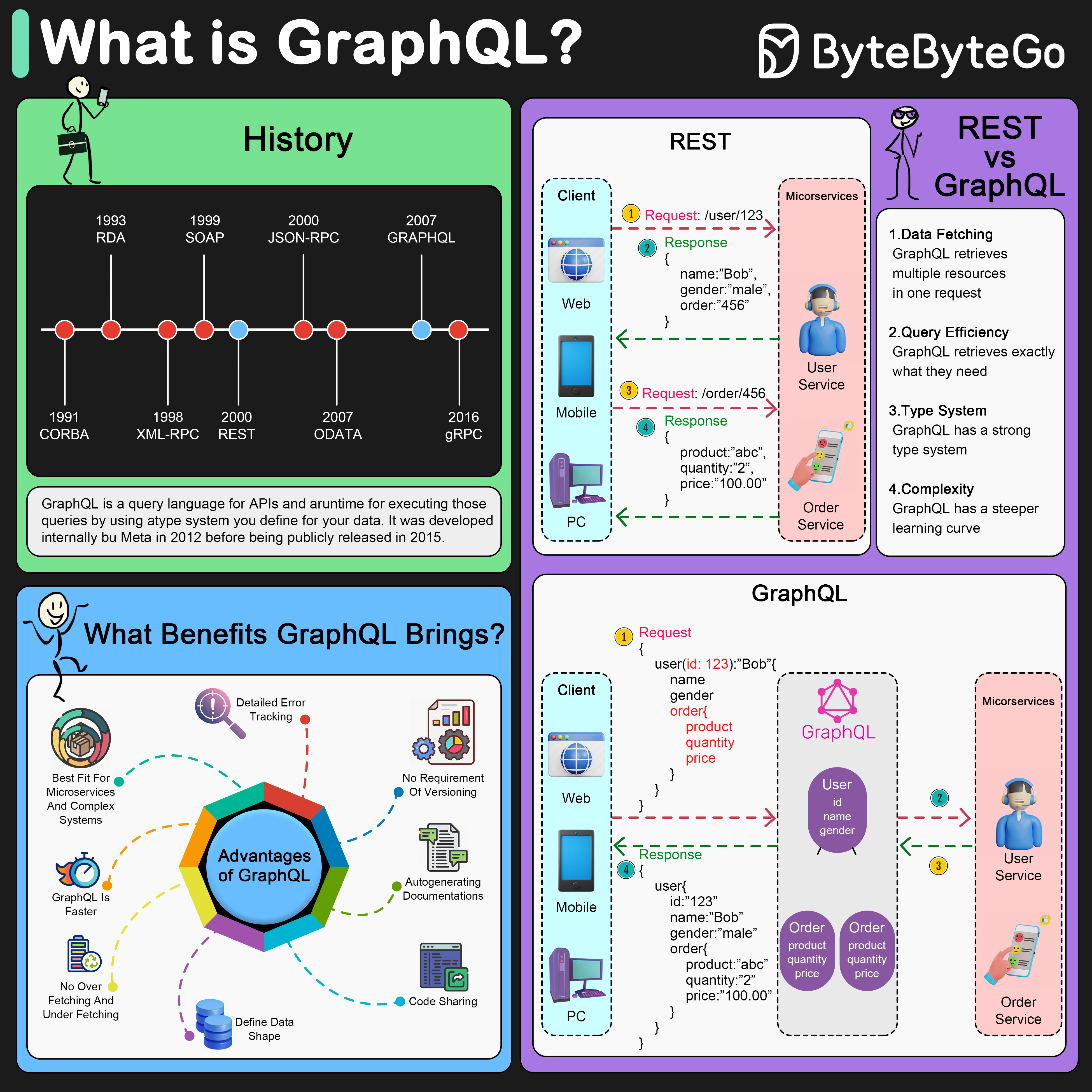 GraphQL is a query language for APIs and a runtime for executing those queries using a type system you define for your data. Developed internally by Meta (Facebook) in 2012 and publicly released in 2015, GraphQL provides a more efficient alternative to traditional REST APIs.
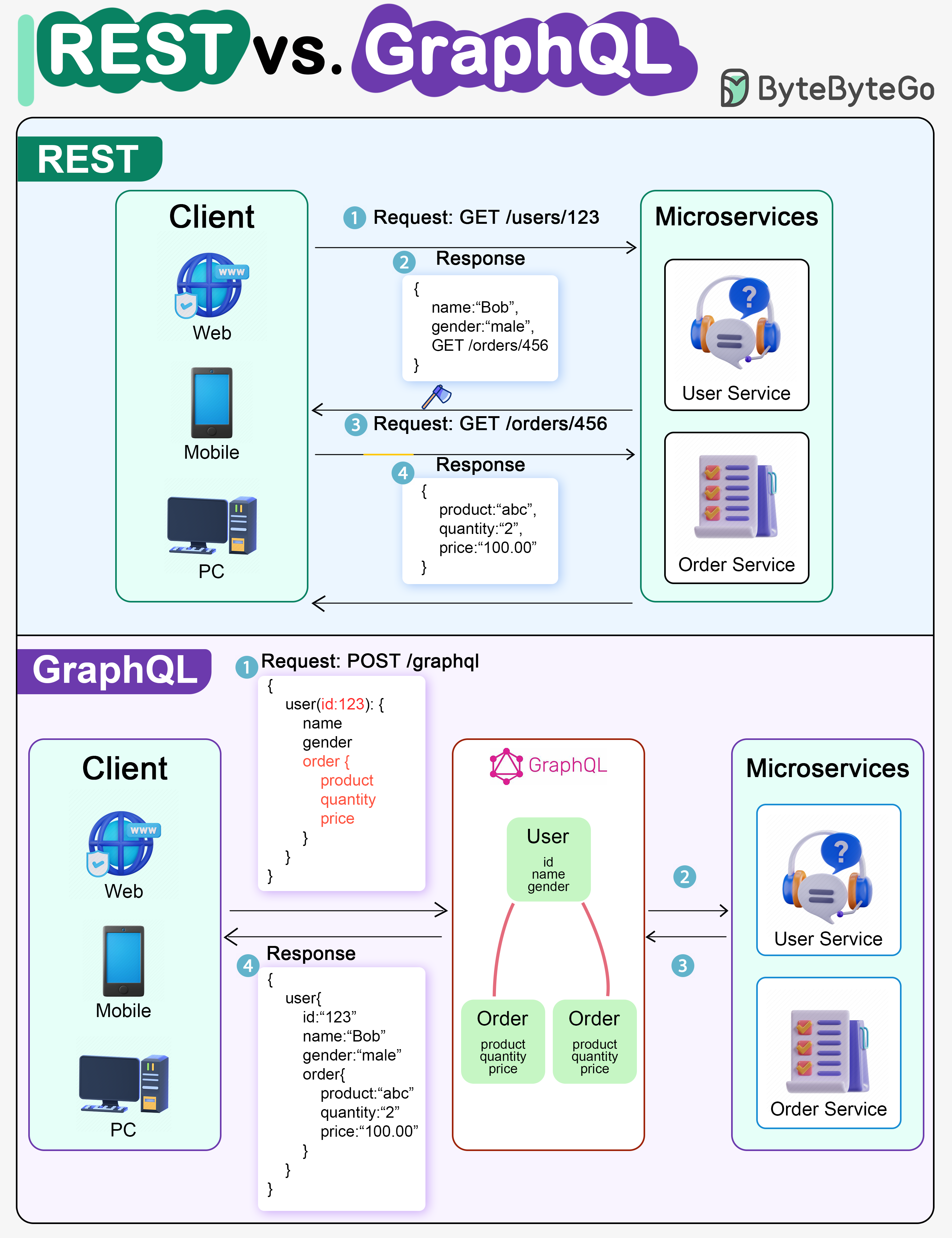
Unlike REST, GraphQL allows clients to request exactly the data they need, making it possible to fetch data from multiple sources with a single query.
How GraphQL Works
GraphQL servers sit between the client and backend services, organizing resources in a graph structure:- Single Endpoint: All queries go to one endpoint, not multiple REST endpoints
- Flexible Queries: Clients specify exactly what data they need
- Type System: Strong typing ensures data consistency and reduces errors
- Data Aggregation: Can combine multiple REST requests into one query
Core Operations
GraphQL supports three types of operations:Benefits of GraphQL
Efficient Data Fetching
GraphQL eliminates over-fetching and under-fetching problems common in REST:Single Request for Multiple Resources
Strong Type System
The type system provides automatic validation and excellent IDE support with autocomplete and documentation.
Key Advantages
- More Accurate Results: Get exactly what you request, no more, no less
- Improved Performance: Fewer network requests and optimized data transfer
- Better Developer Experience: Self-documenting APIs with introspection
- Microservices-Friendly: Excellent for managing complex microservice architectures
- Versioning Not Required: Evolve API by adding new fields without breaking changes
Disadvantages of GraphQL
While powerful, GraphQL has tradeoffs to consider:Increased Complexity
- Steeper learning curve compared to REST
- Requires understanding of GraphQL schema language
- More complex server-side implementation
Query Complexity
- Risk of expensive queries if not properly limited
- Need to implement query depth limiting and cost analysis
- Potential for denial-of-service through complex nested queries
Caching Complexity
Unlike REST where URLs serve as cache keys, GraphQL queries are dynamic, making HTTP-level caching more challenging.
- Cannot use simple HTTP caching mechanisms
- Requires specialized caching strategies (e.g., Apollo Client cache)
- More complex cache invalidation
Over-fetching by Design
- Clients can request unnecessary data if not carefully designed
- Need proper query analysis and monitoring
GraphQL vs REST
| Aspect | REST | GraphQL |
|---|---|---|
| Endpoints | Multiple endpoints per resource | Single endpoint |
| Data Fetching | Fixed data structure | Client specifies exact needs |
| Over/Under-fetching | Common issue | Eliminated |
| Versioning | Required (v1, v2) | Not needed (add new fields) |
| Caching | Straightforward HTTP caching | Requires custom implementation |
| Learning Curve | Lower | Higher |
| Use Case | Simple, uniform interfaces | Complex, evolving requirements |
GraphQL Adoption Patterns
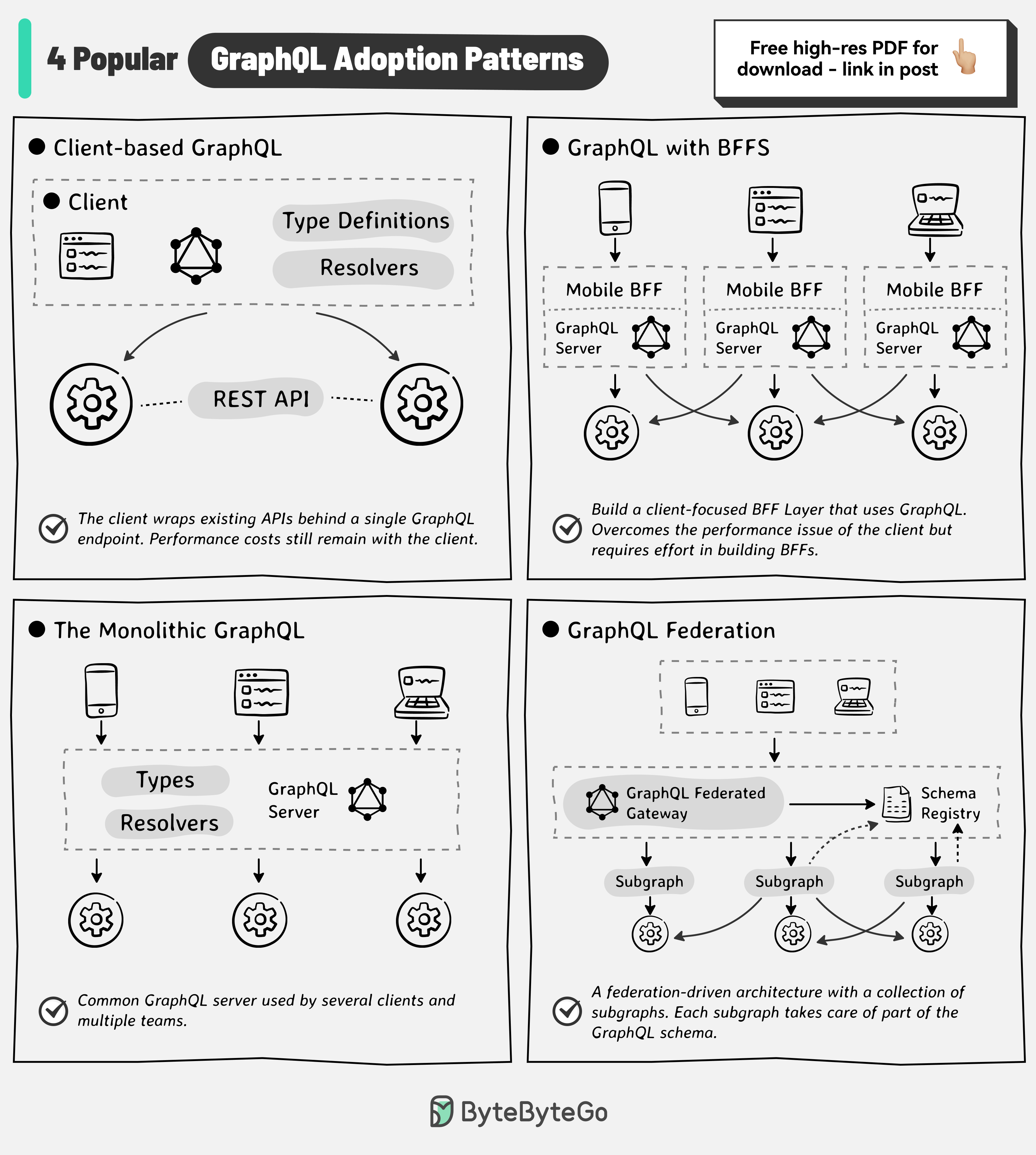 Teams typically adopt GraphQL through one of these patterns:
Client-Based GraphQL
The client wraps existing APIs behind a single GraphQL endpoint.Pros: Improved developer experience for frontendCons: Client still bears performance costs of aggregating data
GraphQL with BFFs (Backend-for-Frontends)
Each client has a dedicated BFF service. GraphQL serves as the client-focused intermediary layer.Pros: Optimized performance and developer experience per clientCons: Additional maintenance overhead for BFF services
Monolithic GraphQL
Single GraphQL server shared by multiple teams and clients.Pros: Centralized API management, consistent schemaCons: Potential bottleneck, coordination overhead
Real-World Example: LinkedIn’s GraphQL Implementation
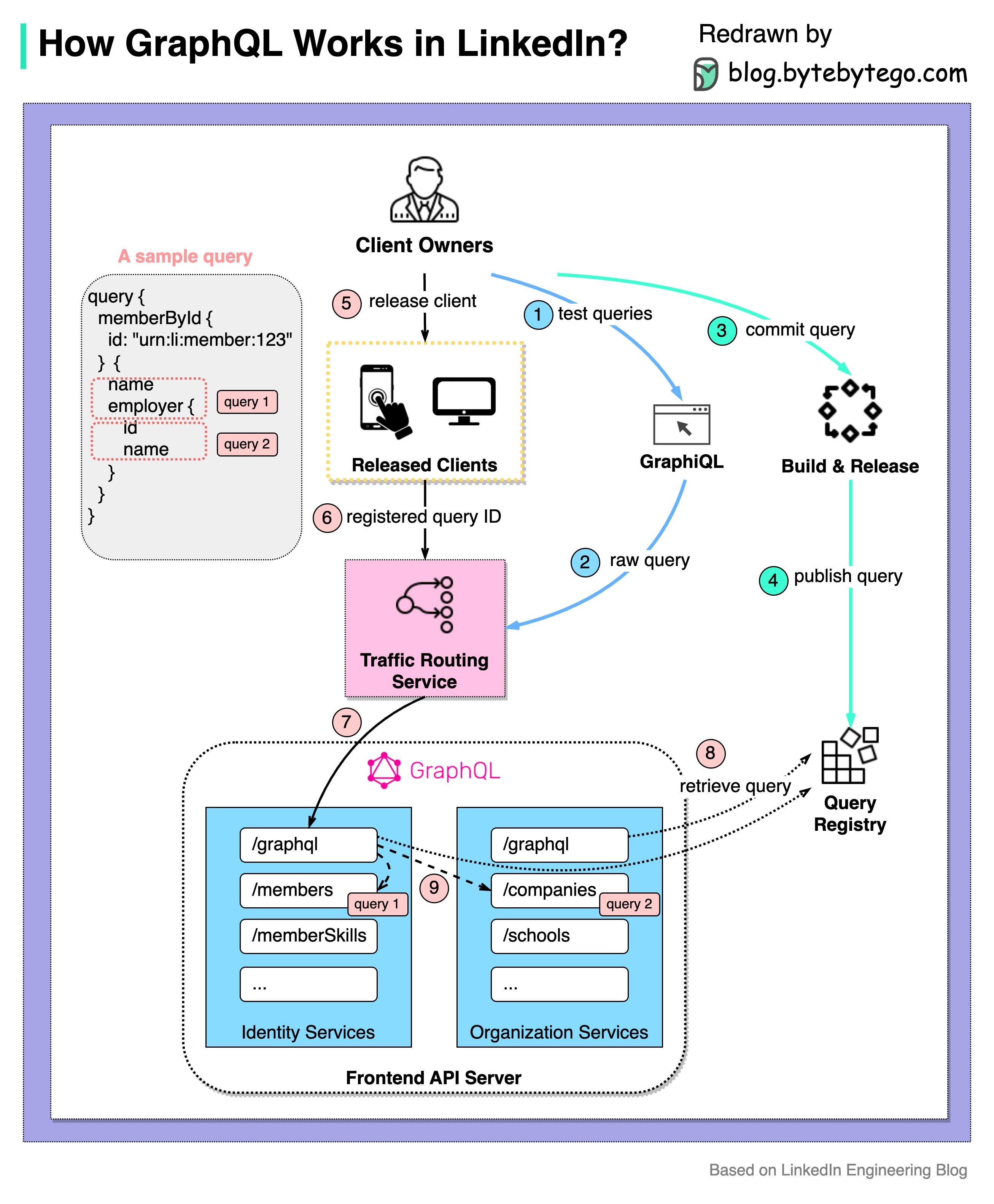 LinkedIn’s GraphQL adoption transformed their development workflow for thousands of engineers:
The Three-Part Workflow
Edit and Test a Query
Client-side developers develop and test queries with backend services during development.
Register a Query
Developers commit the query and publish it to a central query registry for production use.
LinkedIn chose not to deploy a GraphQL gateway to prevent additional network hops and avoid a single point of failure.
Practical GraphQL Examples
Schema Definition
Query Examples
Fragments for Reusability
When to Choose GraphQL
Ideal Use Cases
- Mobile applications requiring minimal data transfer
- Applications with complex, nested data requirements
- Rapidly evolving frontend requirements
- Microservices architecture needing data aggregation
- Real-time applications with subscription needs
- Developer tools and internal APIs
When REST Might Be Better
- Simple CRUD operations
- Public APIs with diverse, unknown clients
- File upload/download operations
- Need for simple HTTP caching
- Team unfamiliar with GraphQL
- Legacy system integration
Key Takeaways
GraphQL excels when you need flexible, efficient data fetching with complex requirements, while REST remains ideal for simple, uniform interfaces with straightforward caching needs.
- GraphQL provides precise data fetching, eliminating over/under-fetching
- Strong type system reduces errors and improves developer experience
- Single endpoint simplifies client development
- More complex to implement and cache than REST
- Best suited for complex, evolving frontend requirements
- Multiple adoption patterns available based on team needs